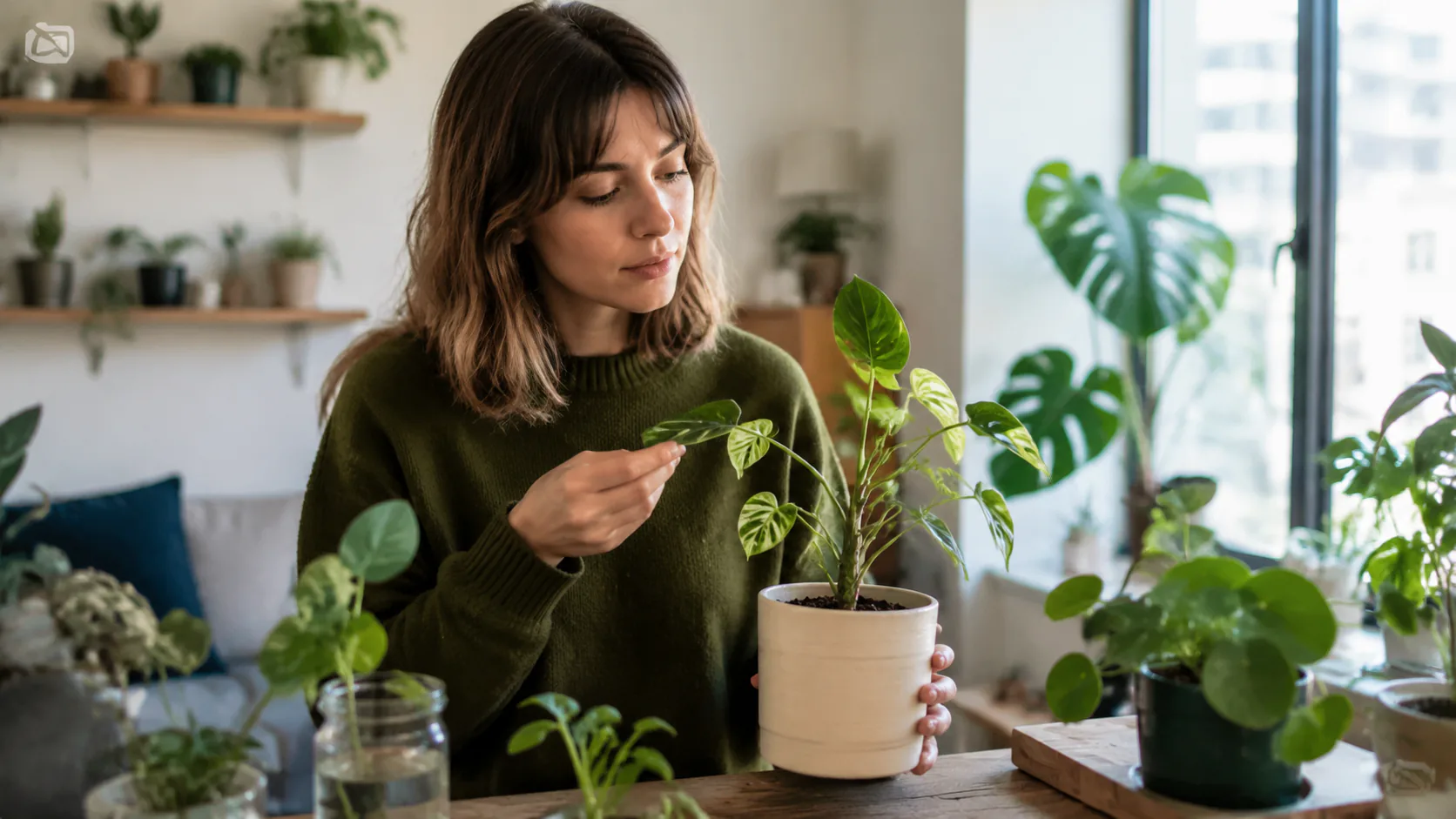
Soil Propagation vs Water Propagation is a practical guide for indoor growers who want plants to survive real homes, not perfect greenhouse conditions. The focus is choosing between soil and water propagation: what to look for, how to set up care, and how to avoid the mistakes that usually cause slow decline.
What Water Propagation Does Well
Water propagation is popular because it is visible. Beginners can see roots forming, which makes the process encouraging and easier to monitor. It works well for many vining tropical plants such as pothos, philodendron, and tradescantia.
Use the current setup to assess node type, stem softness, rot risk, existing roots, humidity, and whether progress needs to be visible. Read those clues together: they show whether the current home supports the goal to select water or soil propagation according to the plant, the cutting, and how closely you can manage moisture, rather than merely describing one damaged leaf or a label on the pot.
What Soil Propagation Does Well
Soil propagation can create roots already adapted to potting mix. It is less dramatic because progress is hidden, but it can reduce transplant shock for some plants. The key is keeping soil lightly moist, not wet and airless.
The care log only needs the details that can change the diagnosis: node type, stem softness, rot risk, existing roots, humidity, and whether progress needs to be visible. Date the note and take a photograph from a consistent angle so that changes related to select water or soil propagation according to the plant, the cutting, and how closely you can manage moisture can be distinguished from normal day-to-day variation.
Which Plants Prefer Which Method
Succulents, cacti, woody cuttings, and many tropical stems respond differently. Some rot quickly in water, while others root easily. The right method depends on plant type, cutting condition, humidity, and how closely the owner can monitor moisture.
The situation most likely to confuse the diagnosis is switching methods repeatedly or burying leaves creates wounds and moisture problems before roots establish. When that pattern appears, return to node type, stem softness, rot risk, existing roots, humidity, and whether progress needs to be visible, identify the smallest relevant cause, and change that variable alone.
Moving From Water to Soil
When moving water-rooted cuttings to soil, wait for several roots rather than one tiny thread. Pot into a small container and keep the mix a little more evenly moist for the first week or two. Then ease into normal watering.
Convert the diagnosis into one action: use one method per labeled cutting, compare root development, and transfer only after the new root system can support the plant. Measure progress through the cues that belong to this article—node type, stem softness, rot risk, existing roots, humidity, and whether progress needs to be visible—and allow enough time for those signs to change before revising the plan.
Decision Checklist
Is water propagation easier than soil propagation? It is easier to observe, but water roots still need a careful transition and some plants root more reliably in medium. Use that answer alongside the current evidence—node type, stem softness, rot risk, existing roots, humidity, and whether progress needs to be visible—instead of treating it as a rule that overrides the plant's condition.
For Soil Propagation vs Water Propagation, the practical takeaway is to select water or soil propagation according to the plant, the cutting, and how closely you can manage moisture. Begin with clean cuts, correct node placement, gentle light, stable warmth, and either fresh water or an airy rooting medium, follow through when you use one method per labeled cutting, compare root development, and transfer only after the new root system can support the plant, and let the next visible response determine whether another change is necessary.
Sources: - Elle Decor, Low-Maintenance Gardening Trends 2026 - https://www.elledecor.com/life-culture/fun-at-home/a70696777/low-maintenance-gardening-trend-2026/ - Joy Us Garden, Bromeliad Care Indoors - https://www.joyusgarden.com/bromeliad-care/ - RHS, How to Grow Bromeliads - https://www.rhs.org.uk/plants/bromeliads/growing-guide