Water Propagation for Beginners is a practical guide for indoor growers who want plants to survive real homes, not perfect greenhouse conditions. The focus is beginner water propagation for houseplants: what to look for, how to set up care, and how to avoid the mistakes that usually cause slow decline.
Choose a Cutting With a Node
Water propagation is beginner-friendly because the process is visible, but it still needs the right cutting. For common vining plants, include at least one node under the water line. A leaf alone may look alive but may never produce a new plant.
Start with node location, stem firmness, water clarity, root color, leaf condition, and the length and branching of new roots. Read those clues together: they show whether the current home supports the goal to take a healthy cutting with the correct node and keep foliage out of clean water, rather than merely describing one damaged leaf or a label on the pot.
Use Clean Water and Bright Indirect Light
Use a clean jar and room-temperature water. Place the cutting in bright indirect light, not harsh sun that overheats the glass. Remove leaves that would sit below the water because submerged leaves rot quickly.
A short record is most useful when it captures node location, stem firmness, water clarity, root color, leaf condition, and the length and branching of new roots. Date the note and take a photograph from a consistent angle so that changes related to take a healthy cutting with the correct node and keep foliage out of clean water can be distinguished from normal day-to-day variation.
Change Water Before It Gets Stale
Refresh the water regularly, especially if it turns cloudy. Some algae on glass is normal, but smelly water or mushy stems are warning signs. Trim rot back to healthy tissue if possible and restart in a clean container.
The avoidable failure pattern is waiting for an oversized mass of water roots can make the move to soil harder and increases tangling or breakage. When that pattern appears, return to node location, stem firmness, water clarity, root color, leaf condition, and the length and branching of new roots, identify the smallest relevant cause, and change that variable alone.
Know When Roots Are Ready
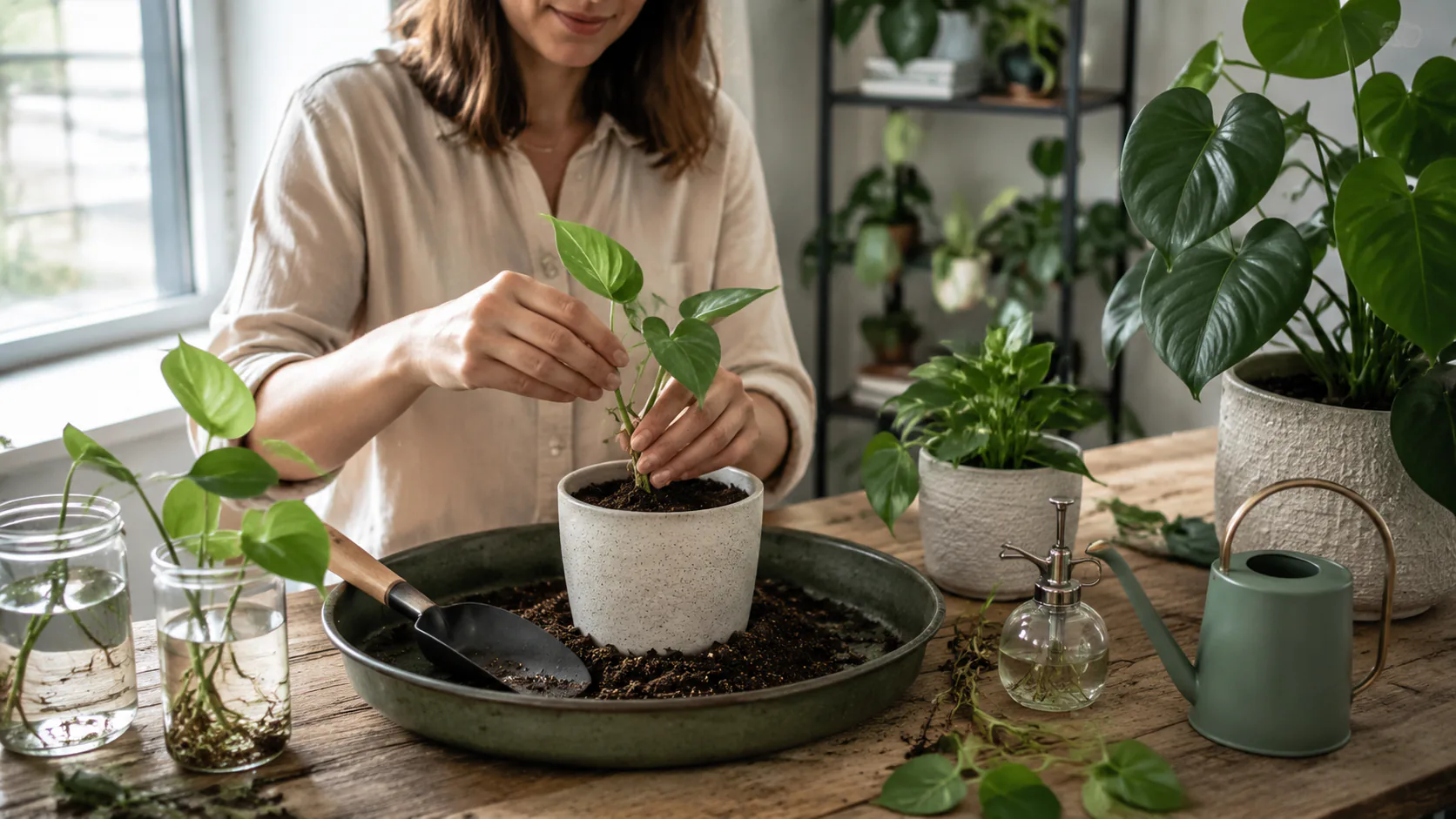
Roots are usually ready for soil when they are a few inches long and branching. Move to a small pot with drainage, keep the mix lightly moist at first, and avoid tugging to check roots. New leaf growth is the best sign that the cutting has adapted.
Make the routine concrete: photograph root progress, pot when the root system can anchor the cutting, and keep the new mix evenly moist during transition. Measure progress through the cues that belong to this article—node location, stem firmness, water clarity, root color, leaf condition, and the length and branching of new roots—and allow enough time for those signs to change before revising the plan.
Potting the Cutting
When should a water-rooted cutting move to soil? Move it after several healthy roots have developed, before they become excessively long and difficult to arrange. Use that answer alongside the current evidence—node location, stem firmness, water clarity, root color, leaf condition, and the length and branching of new roots—instead of treating it as a rule that overrides the plant's condition.
For Water Propagation for Beginners, the practical takeaway is to take a healthy cutting with the correct node and keep foliage out of clean water. Begin with clean tools, a stable vessel, bright indirect light, fresh water, a label, and a suitable potting mix ready for transition, follow through when you photograph root progress, pot when the root system can anchor the cutting, and keep the new mix evenly moist during transition, and let the next visible response determine whether another change is necessary.
Sources: - Elle Decor, Low-Maintenance Gardening Trends 2026 - https://www.elledecor.com/life-culture/fun-at-home/a70696777/low-maintenance-gardening-trend-2026/ - Yahoo, Major Houseplant Trends for 2026 - https://shopping.yahoo.com/home-garden/gardening/articles/6-major-houseplant-trends-2026-050000030.html - Hicks Nurseries, Top Houseplant Trends for the New Year - https://hicksnurseries.com/houseplants/top-houseplant-trends-for-the-new-year/