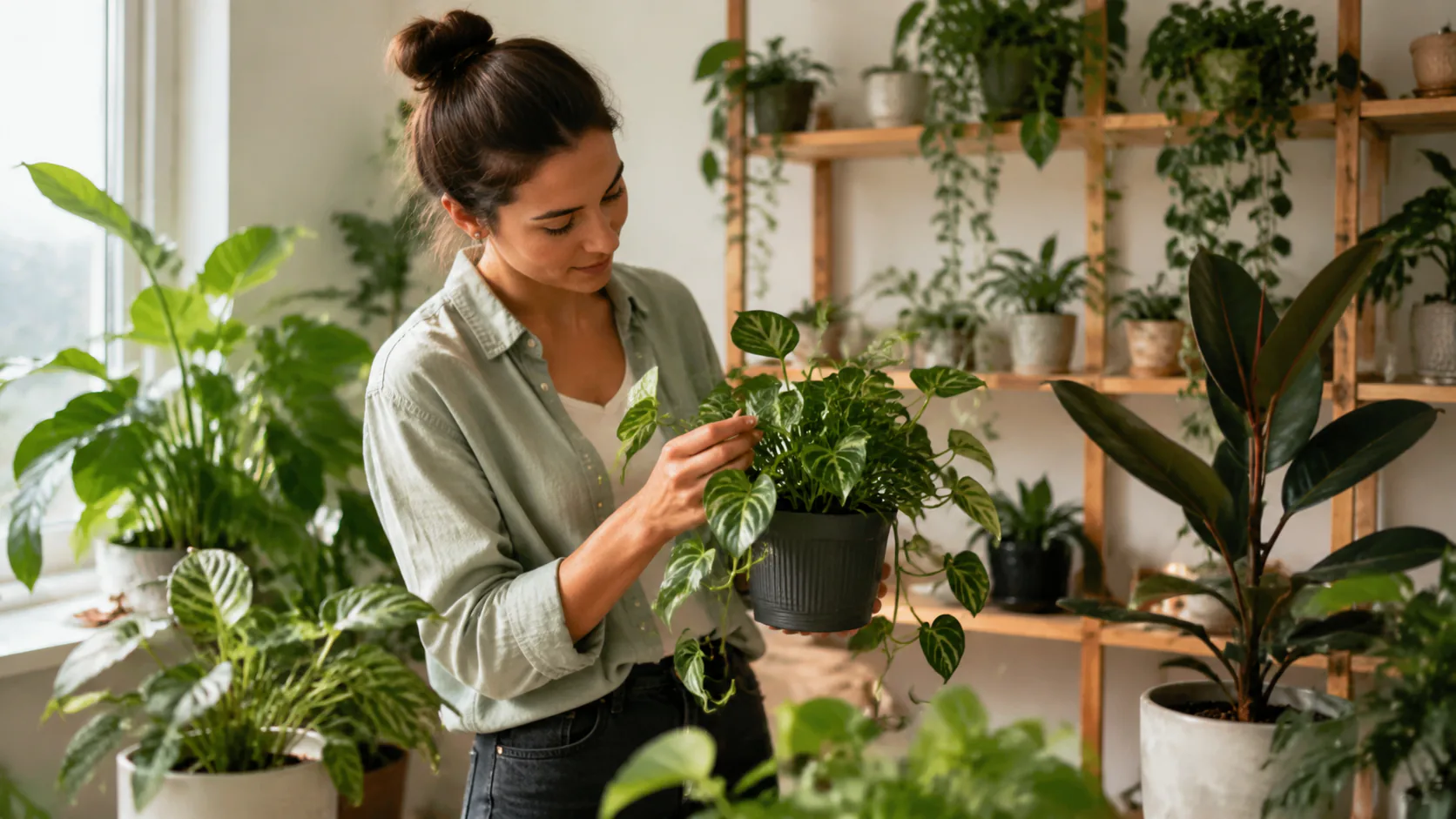
Plant Swap Cuttings Guide is a practical guide for indoor growers who want plants to survive real homes, not perfect greenhouse conditions. The focus is sharing and receiving plant cuttings safely: what to look for, how to set up care, and how to avoid the mistakes that usually cause slow decline.
Bring Clean, Labeled Cuttings
A good plant swap is part community event and part plant-health responsibility. Bring cuttings that are healthy, pest-free, and properly labeled. Include the plant name, light preference, and whether the cutting is rooted or unrooted.
Look closely at nodes, pests, leaf condition, rooting status, plant identity, source date, and whether the recipient has suitable light. Read those clues together: they show whether the current home supports the goal to trade healthy, correctly identified material and agree on what each cutting needs before the exchange, rather than merely describing one damaged leaf or a label on the pot.
Check for Pests Before Sharing
Inspect leaves, stems, and soil before sharing. Mealybugs, spider mites, scale, and fungus gnats spread easily when plants move between homes. If a plant has had pests recently, skip sharing it until it has been clear for a while.
Instead of logging every minor action, document nodes, pests, leaf condition, rooting status, plant identity, source date, and whether the recipient has suitable light. Date the note and take a photograph from a consistent angle so that changes related to trade healthy, correctly identified material and agree on what each cutting needs before the exchange can be distinguished from normal day-to-day variation.
Pack Cuttings for the Trip
Wrap cut ends or roots in lightly damp paper, protect leaves from crushing, and avoid leaving cuttings in a hot car. Succulent pieces should travel drier than tropical cuttings. A simple label prevents confusion after everyone gets home.
One warning deserves special attention: a free cutting can introduce pests or disease, so enthusiasm should not replace inspection. When that pattern appears, return to nodes, pests, leaf condition, rooting status, plant identity, source date, and whether the recipient has suitable light, identify the smallest relevant cause, and change that variable alone.
Quarantine New Arrivals
New cuttings should be quarantined away from the main collection for at least a couple of weeks. Watch for pests and decline before placing them near other plants. Good swap etiquette means sharing care notes, not just stems.
A repeatable next step is to label every cutting, photograph the parent plant, share basic care notes, and quarantine arrivals before joining the collection. Measure progress through the cues that belong to this article—nodes, pests, leaf condition, rooting status, plant identity, source date, and whether the recipient has suitable light—and allow enough time for those signs to change before revising the plan.
Swap Etiquette
Should swapped cuttings be quarantined? Yes. Keep them separate long enough to inspect new growth and repeat pest checks before mixing collections. Use that answer alongside the current evidence—nodes, pests, leaf condition, rooting status, plant identity, source date, and whether the recipient has suitable light—instead of treating it as a rule that overrides the plant's condition.
For Plant Swap Cuttings Guide, the practical takeaway is to trade healthy, correctly identified material and agree on what each cutting needs before the exchange. Begin with clean cuts, labels, protective wrapping, honest pest disclosure, and a quarantine location at the receiving home, follow through when you label every cutting, photograph the parent plant, share basic care notes, and quarantine arrivals before joining the collection, and let the next visible response determine whether another change is necessary.
Sources: - Elle Decor, Low-Maintenance Gardening Trends 2026 - https://www.elledecor.com/life-culture/fun-at-home/a70696777/low-maintenance-gardening-trend-2026/ - Architectural Digest, Pet-Friendly Houseplants - https://www.architecturaldigest.com/story/pet-friendly-houseplants - Gardenia, Pet-Safe Houseplants for Cats - https://www.gardenia.net/guide/pet-safe-houseplants-perfect-picks-for-cat-owners