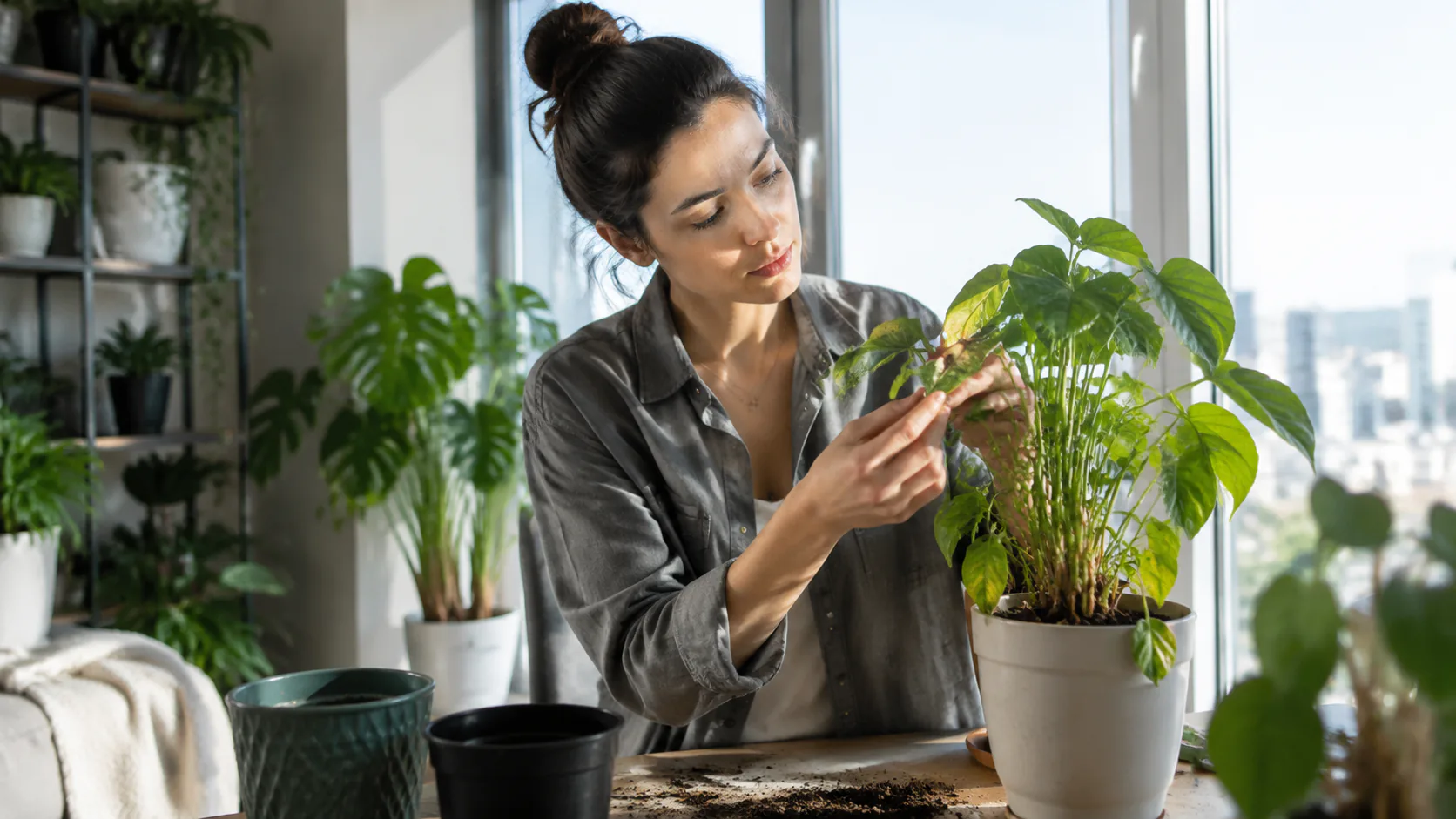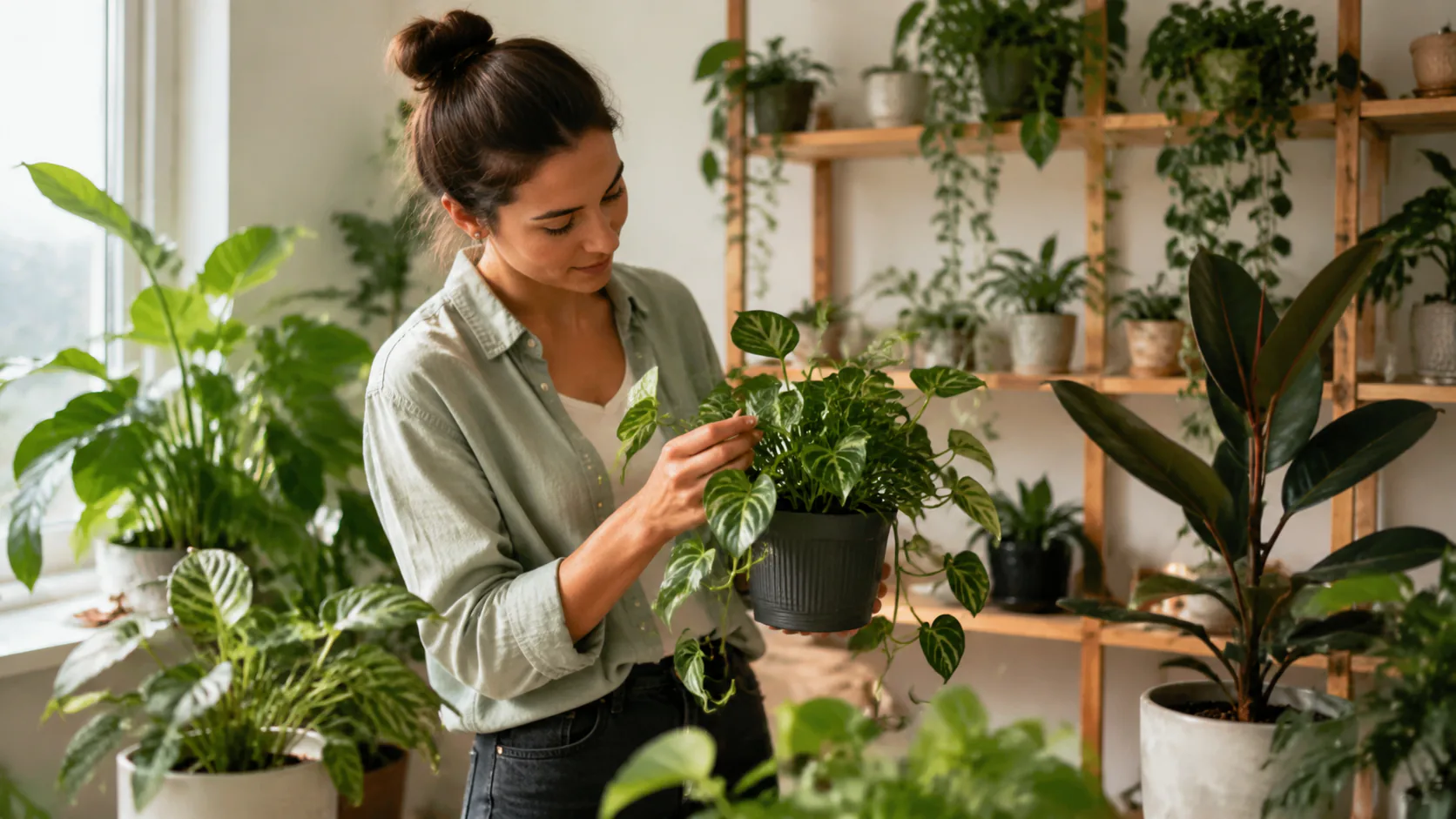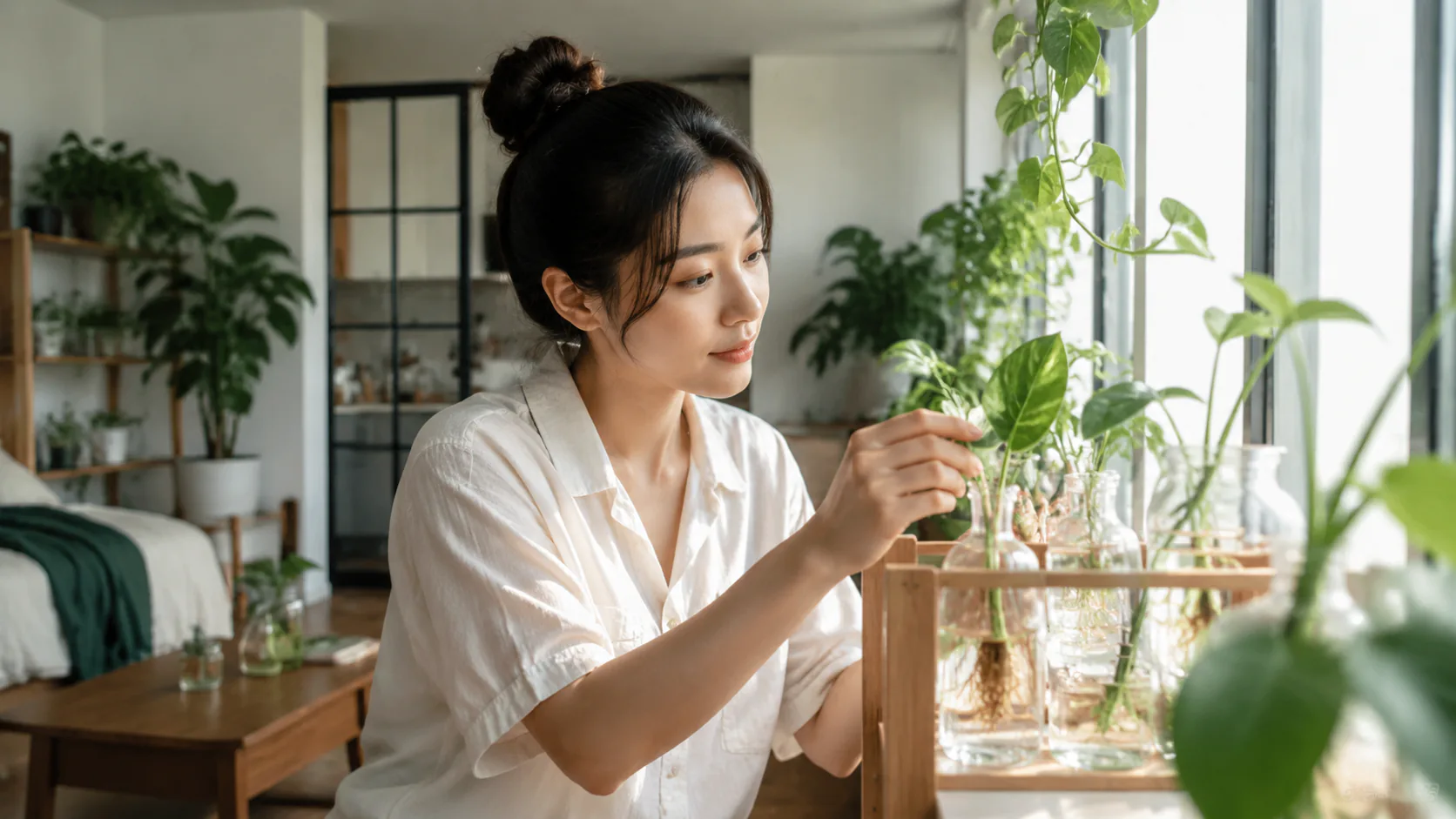
Propagation Station Setup for Small Apartments is a practical guide for indoor growers who want plants to survive real homes, not perfect greenhouse conditions. The focus is setting up a small apartment propagation station: what to look for, how to set up care, and how to avoid the mistakes that usually cause slow decline.
Choose a Bright, Stable Spot
A propagation station does not need to look like a laboratory. It needs steady light, clean containers, labels, and enough space that cuttings are easy to inspect. A windowsill, shelf with a grow light, or small tray near a bright window can work.
Before making a change, note light direction, heat near the glass, water clarity, node position, container stability, and dates of root changes. Read those clues together: they show whether the current home supports the goal to build a small functional station around light and cleanliness instead of collecting decorative vessels first, rather than merely describing one damaged leaf or a label on the pot.
Use Simple Containers
Clear jars are useful because roots are visible, but they should be cleaned regularly. Soil propagation needs small pots, drainage, and an airy mix. Keep water and soil projects separate so care does not become confusing.
For the next comparison, write down light direction, heat near the glass, water clarity, node position, container stability, and dates of root changes. Date the note and take a photograph from a consistent angle so that changes related to build a small functional station around light and cleanliness instead of collecting decorative vessels first can be distinguished from normal day-to-day variation.
Keep Labels and Dates
Labels matter more than people expect. Write the plant name, date cut, and method. After several weeks, every cutting can start to look like a hopeful green stick. Dates help you judge whether a cutting is progressing or quietly failing.
The most misleading shortcut is crowded unlabeled jars make it easy to confuse species, miss rot, and leave rooted cuttings in water too long. When that pattern appears, return to light direction, heat near the glass, water clarity, node position, container stability, and dates of root changes, identify the smallest relevant cause, and change that variable alone.
Manage Water and Humidity
Do not crowd the station. Crowding blocks light and makes pests harder to notice. Refresh water, remove rotting leaves, and pot rooted cuttings before the setup becomes a permanent holding area.
Put the guidance into practice by choosing to group cuttings by method, label start dates, photograph weekly progress, and remove failing material before it affects others. Measure progress through the cues that belong to this article—light direction, heat near the glass, water clarity, node position, container stability, and dates of root changes—and allow enough time for those signs to change before revising the plan.
Avoid Turning It Into Clutter
Does a propagation station need special equipment? No. Clean stable containers, suitable light, labels, and consistent observation are enough for a practical setup. Use that answer alongside the current evidence—light direction, heat near the glass, water clarity, node position, container stability, and dates of root changes—instead of treating it as a rule that overrides the plant's condition.
For Propagation Station Setup for Small Apartments, the practical takeaway is to build a small functional station around light and cleanliness instead of collecting decorative vessels first. Begin with clean vessels, labels, a washable tray, bright indirect light, stable warmth, and room to handle cuttings safely, follow through when you group cuttings by method, label start dates, photograph weekly progress, and remove failing material before it affects others, and let the next visible response determine whether another change is necessary.
Sources: - Elle Decor, Low-Maintenance Gardening Trends 2026 - https://www.elledecor.com/life-culture/fun-at-home/a70696777/low-maintenance-gardening-trend-2026/ - Hicks Nurseries, Top Houseplant Trends for the New Year - https://hicksnurseries.com/houseplants/top-houseplant-trends-for-the-new-year/ - Yahoo, Major Houseplant Trends for 2026 - https://shopping.yahoo.com/home-garden/gardening/articles/6-major-houseplant-trends-2026-050000030.html