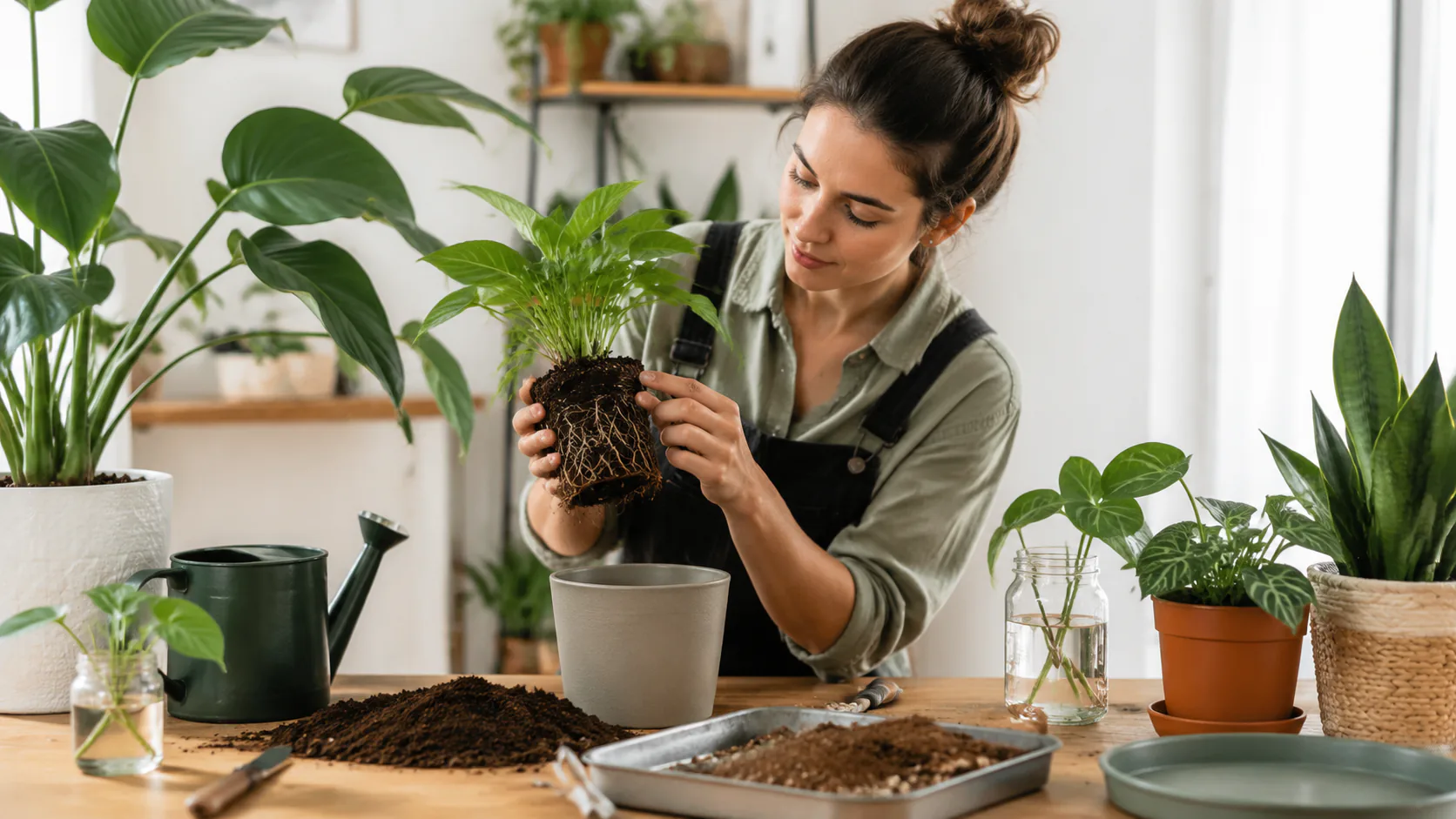
Soil and Repotting Basics for Indoor Plants is a practical guide for indoor growers who want plants to survive real homes, not perfect greenhouse conditions. The focus is soil choice and repotting houseplants: what to look for, how to set up care, and how to avoid the mistakes that usually cause slow decline.
Soil Is a Root Environment
Houseplant soil is not just dirt. It controls water, oxygen, anchoring, and nutrient availability around the roots. Dense mix holds water longer; chunky mix dries faster and gives roots more air. Matching soil to the plant prevents many problems before they start.
Build the diagnosis around circling roots, rapid dry-down, stalled growth, poor drainage, compacted mix, and the condition of the root ball. Read those clues together: they show whether the current home supports the goal to choose potting mix for root oxygen and moisture behavior, then repot only when evidence shows the current container is limiting the plant, rather than merely describing one damaged leaf or a label on the pot.
When Repotting Is Actually Needed
Repot when roots circle tightly, water runs straight through, the plant dries unusually fast, or growth stalls despite good light and care. Do not repot only because a decorative container looks attractive. A pot that is too large can keep soil wet around a small root system.
Photographs become useful evidence when they are paired with circling roots, rapid dry-down, stalled growth, poor drainage, compacted mix, and the condition of the root ball. Date the note and take a photograph from a consistent angle so that changes related to choose potting mix for root oxygen and moisture behavior, then repot only when evidence shows the current container is limiting the plant can be distinguished from normal day-to-day variation.
Choose the Right Pot Size
Move up one pot size for most plants. Use drainage holes and a mix suited to the plant: chunkier for aroids and epiphytes, gritty for succulents, moisture-retentive but airy for many foliage plants. Remove rotten roots but avoid rough handling healthy ones.
Do not overlook this risk: moving a small root ball into a much larger wet pot leaves unused mix moist for too long. When that pattern appears, return to circling roots, rapid dry-down, stalled growth, poor drainage, compacted mix, and the condition of the root ball, identify the smallest relevant cause, and change that variable alone.
Repot Without Shock
After repotting, return the plant to stable light and avoid heavy fertilizer immediately. Some drooping is normal. Keep moisture even but not soggy while roots settle. A plant that was already stressed may need a slower, gentler recovery.
The simplest useful sequence is to inspect roots, trim only dead material, keep the plant at its original depth, and monitor recovery before fertilizing. Measure progress through the cues that belong to this article—circling roots, rapid dry-down, stalled growth, poor drainage, compacted mix, and the condition of the root ball—and allow enough time for those signs to change before revising the plan.
Aftercare
Should a new houseplant be repotted immediately? Not automatically. First assess roots, mix, pests, drainage, and acclimation stress. Use that answer alongside the current evidence—circling roots, rapid dry-down, stalled growth, poor drainage, compacted mix, and the condition of the root ball—instead of treating it as a rule that overrides the plant's condition.
For Soil and Repotting Basics for Indoor Plants, the practical takeaway is to choose potting mix for root oxygen and moisture behavior, then repot only when evidence shows the current container is limiting the plant. Begin with fresh appropriate mix, a clean pot with drainage, only a modest size increase, and tools ready before roots are exposed, follow through when you inspect roots, trim only dead material, keep the plant at its original depth, and monitor recovery before fertilizing, and let the next visible response determine whether another change is necessary.
Sources: - RHS, How to Grow Bromeliads - https://www.rhs.org.uk/plants/bromeliads/growing-guide - Better Homes & Gardens, Ficus Care Tips - https://www.bhg.com/ficus-care-tips-11924126 - Plant Addicts, Bromeliad Care - https://plantaddicts.com/bromeliad-care/