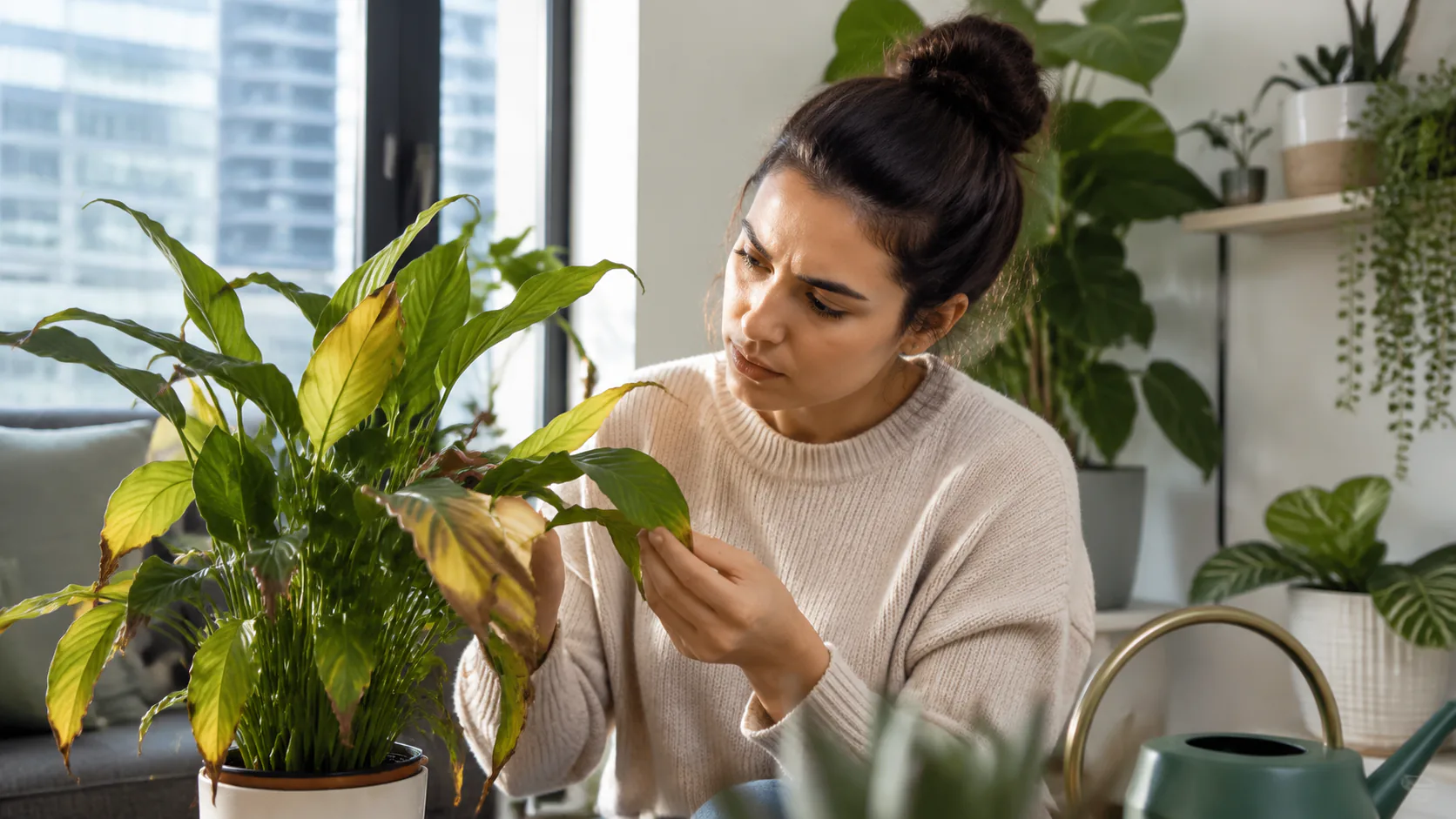
Plant Problem Diagnosis for Yellow Leaves and Brown Tips is a practical guide for indoor growers who want plants to survive real homes, not perfect greenhouse conditions. The focus is diagnosing yellow leaves and brown tips: what to look for, how to set up care, and how to avoid the mistakes that usually cause slow decline.
Look at the Whole Plant
Yellow leaves and brown tips are symptoms, not diagnoses. The same symptom can come from too much water, too little water, low light, salt buildup, dry air, pests, cold drafts, or normal aging. Start with the whole plant, not one leaf.
Start with old versus new leaves, top versus bottom growth, soil moisture, root smell, pest signs, recent moves, and weather changes. Read those clues together: they show whether the current home supports the goal to diagnose the pattern across the whole plant before reacting to one yellow leaf or one brown tip, rather than merely describing one damaged leaf or a label on the pot.
Yellow Leaves
A single old lower leaf turning yellow may be normal. Several yellow leaves at once often point to watering or root trouble. Check whether the pot drains, whether the mix smells sour, and whether the plant was recently moved into lower light.
A short record is most useful when it captures old versus new leaves, top versus bottom growth, soil moisture, root smell, pest signs, recent moves, and weather changes. Date the note and take a photograph from a consistent angle so that changes related to diagnose the pattern across the whole plant before reacting to one yellow leaf or one brown tip can be distinguished from normal day-to-day variation.
Brown Tips
Brown tips often come from inconsistent moisture, low humidity, mineral buildup, or air movement from heating and cooling. Crispy edges can also follow underwatering. Soft brown patches are more concerning and may signal rot or disease.
The avoidable failure pattern is simultaneously repotting, fertilizing, moving, and treating pests destroys the evidence needed to identify the cause. When that pattern appears, return to old versus new leaves, top versus bottom growth, soil moisture, root smell, pest signs, recent moves, and weather changes, identify the smallest relevant cause, and change that variable alone.
Check Roots and Recent Changes
The safest diagnosis method is slow and evidence-based. Inspect roots if the pot has stayed wet. Check for pests under leaves. Review changes in light, fertilizer, repotting, and room temperature. Change one condition, then give the plant time to respond.
Make the routine concrete: photograph the plant, note the last care change, inspect roots or pests only when evidence points there, and reassess after adjustment. Measure progress through the cues that belong to this article—old versus new leaves, top versus bottom growth, soil moisture, root smell, pest signs, recent moves, and weather changes—and allow enough time for those signs to change before revising the plan.
Make One Change at a Time
Do yellow leaves always mean overwatering? No. Age, underwatering, root stress, light changes, nutrition, and pests can also yellow foliage. Use that answer alongside the current evidence—old versus new leaves, top versus bottom growth, soil moisture, root smell, pest signs, recent moves, and weather changes—instead of treating it as a rule that overrides the plant's condition.
For Plant Problem Diagnosis for Yellow Leaves and Brown Tips, the practical takeaway is to diagnose the pattern across the whole plant before reacting to one yellow leaf or one brown tip. Begin with a timeline, good light for inspection, a soil check, clean tools, and patience to change one variable at a time, follow through when you photograph the plant, note the last care change, inspect roots or pests only when evidence points there, and reassess after adjustment, and let the next visible response determine whether another change is necessary.
Sources: - Plant Addicts, Bromeliad Care - https://plantaddicts.com/bromeliad-care/ - Better Homes & Gardens, Ficus Care Tips - https://www.bhg.com/ficus-care-tips-11924126 - MyDomaine, Bromeliad Plant Care - https://www.mydomaine.com/bromeliad-plant-care-4769755