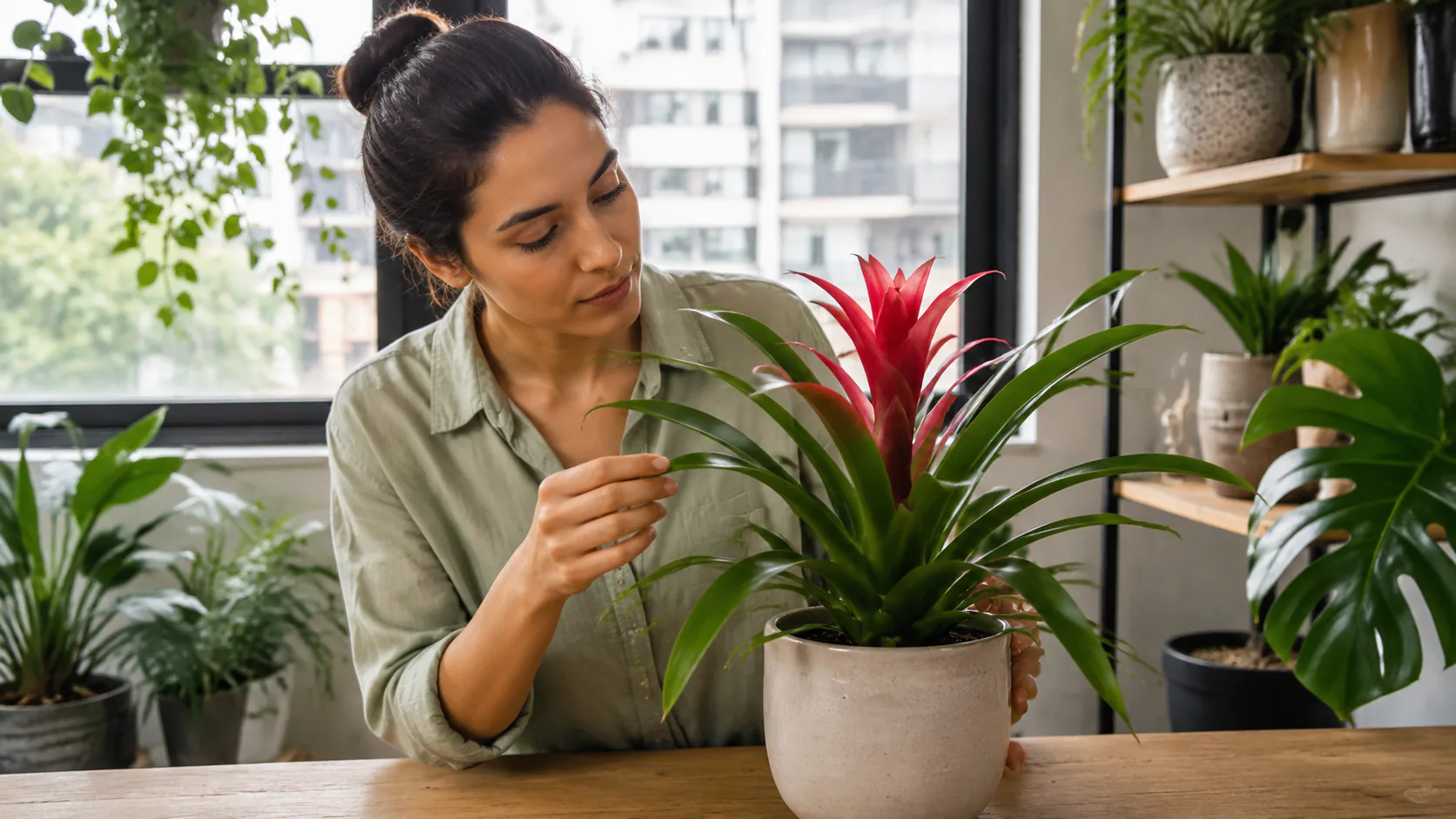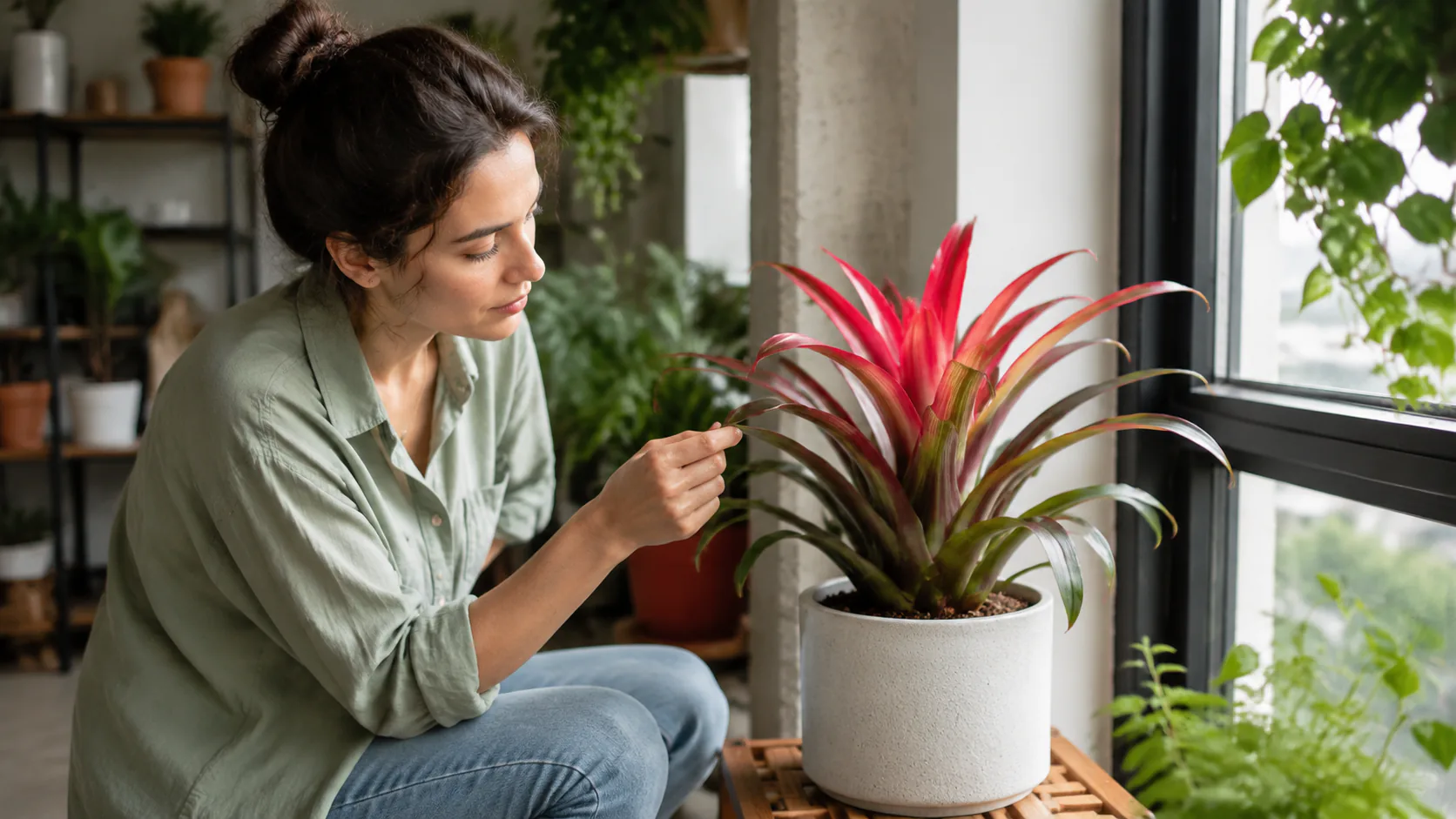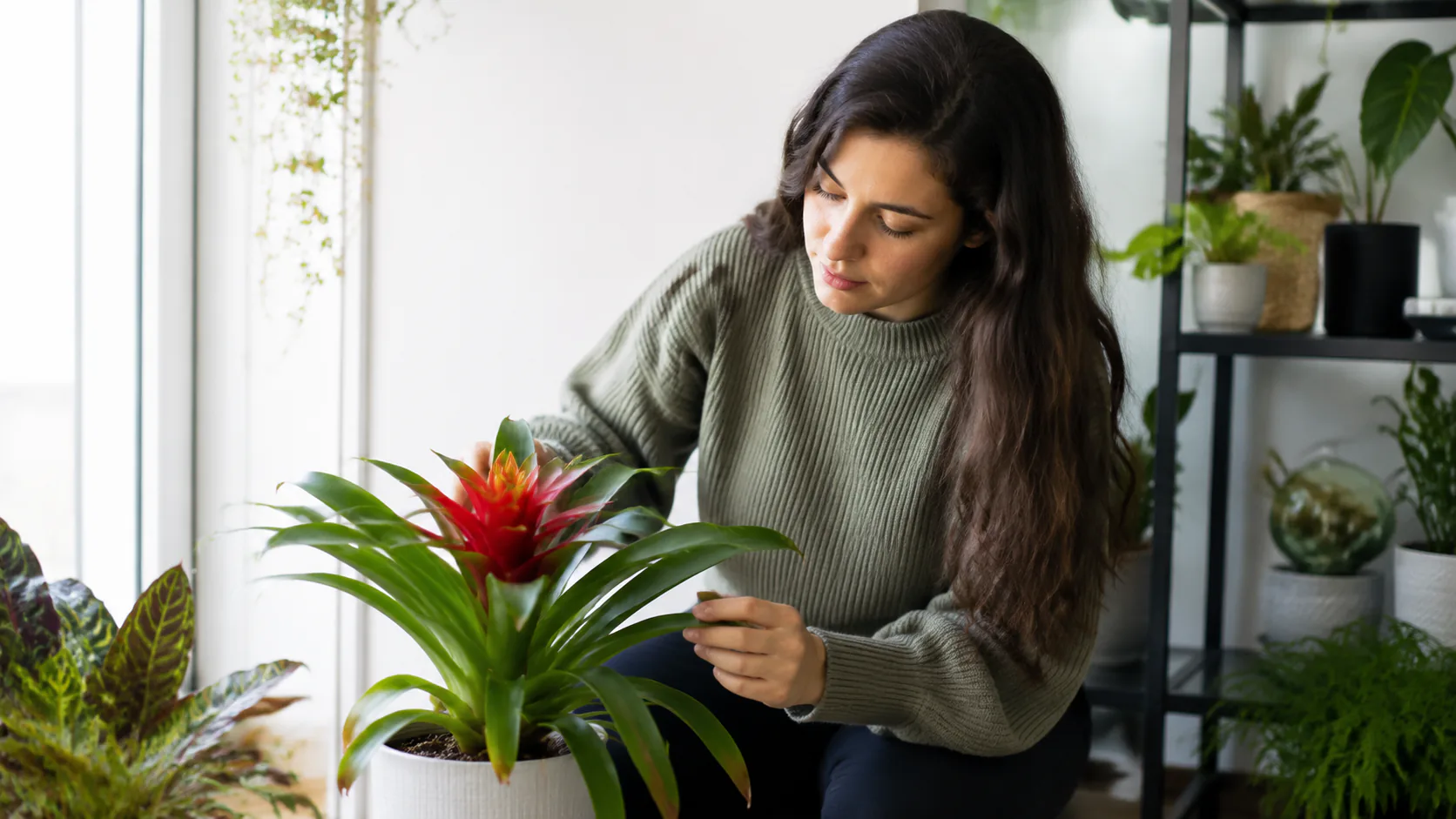
Bromeliad Bloom Cycle Explained is a practical guide for indoor growers who want plants to survive real homes, not perfect greenhouse conditions. The focus is what really happens before, during, and after a bromeliad bloom: what to look for, how to set up care, and how to avoid the mistakes that usually cause slow decline.
What the Bloom Really Is
A bromeliad bloom is not the same kind of repeat-flowering display people expect from many flowering houseplants. In many popular genera, the colorful part is a bract that can hold its color for weeks or months while the true flowers are smaller and shorter-lived. That is why a plant can still look vibrant even after the actual flower has finished.
Look closely at the condition of the central rosette, the firmness of the leaves, the roots, and the appearance of pups around the base. Read those clues together: they show whether the current home supports the goal to recognize that the flowering rosette has a life cycle and that fading color is not automatically a care failure, rather than merely describing one damaged leaf or a label on the pot.
Care While the Color Lasts
During the display, keep the plant in bright indirect light and avoid the urge to fertilize heavily. The goal is steady comfort, not forced growth. If the plant forms a central cup, refresh the water regularly and keep the potting mix lightly moist but never swampy. Good air movement matters because stagnant water and cold rooms can turn a decorative plant into a rot problem.
Instead of logging every minor action, document the condition of the central rosette, the firmness of the leaves, the roots, and the appearance of pups around the base. Date the note and take a photograph from a consistent angle so that changes related to recognize that the flowering rosette has a life cycle and that fading color is not automatically a care failure can be distinguished from normal day-to-day variation.
After the Flower Fades
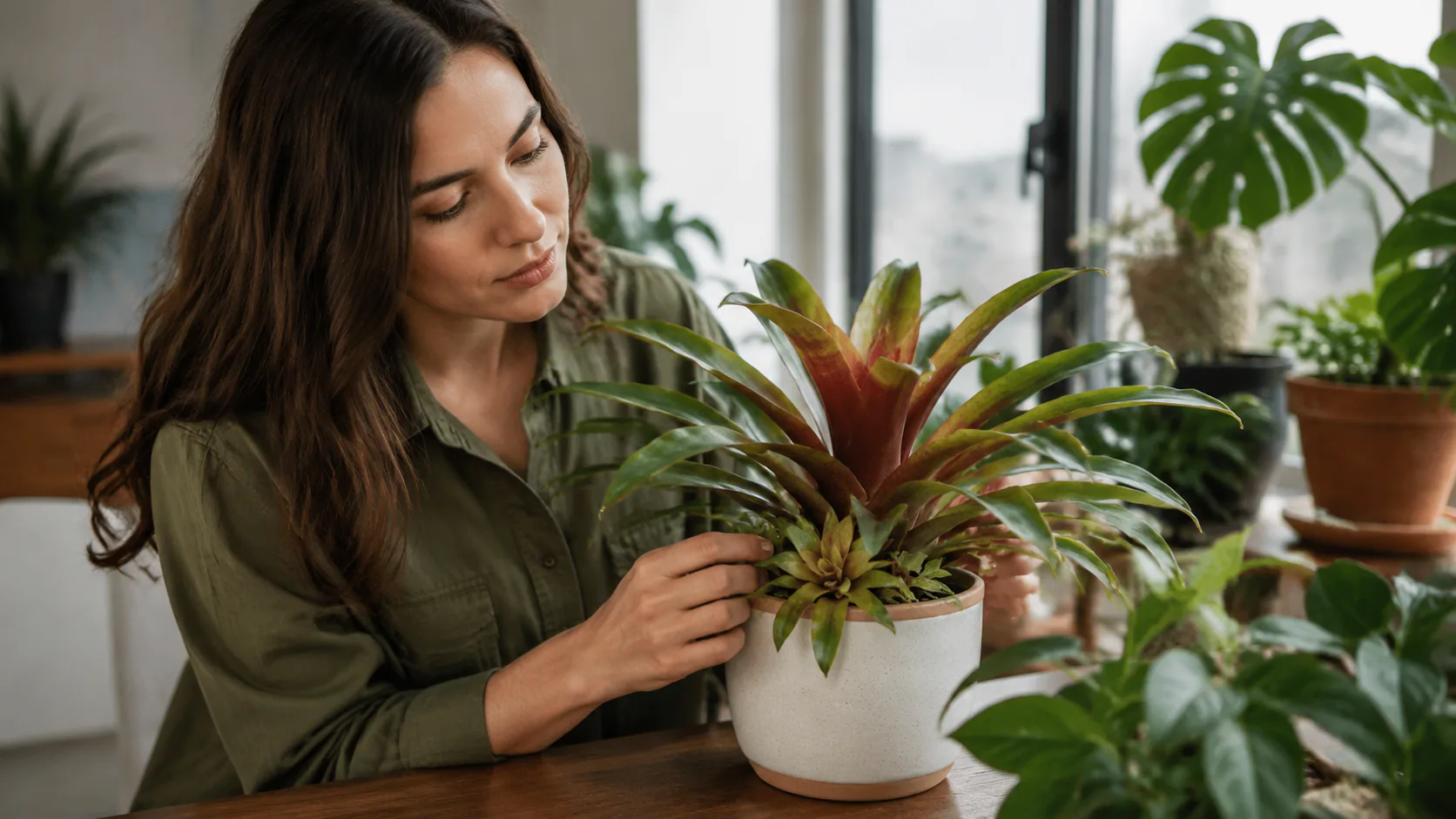
After blooming, the original rosette slowly declines. That decline is normal, not proof that the owner failed. The useful work shifts to watching for pups at the base. Keep removing fully brown foliage, but leave green tissue alone because it still feeds the offsets. A patient owner can get several new plants from one mature bromeliad.
One warning deserves special attention: discarding the whole plant immediately after bloom can remove healthy pups that are the next generation. When that pattern appears, return to the condition of the central rosette, the firmness of the leaves, the roots, and the appearance of pups around the base, identify the smallest relevant cause, and change that variable alone.
Growing Pups Without Rushing
Wait until pups are roughly one-third to one-half the size of the parent before separating them. Use a clean blade, keep a little root if possible, and pot them in an airy mix that drains fast. Fresh pups wobble at first, so stability and bright filtered light are more important than frequent watering.
A repeatable next step is to remove only fully spent material, keep normal care steady, and let each pup gain size before separation. Measure progress through the cues that belong to this article—the condition of the central rosette, the firmness of the leaves, the roots, and the appearance of pups around the base—and allow enough time for those signs to change before revising the plan.
Common Questions
Will the same bromeliad rosette bloom again? The original rosette normally declines after flowering, while healthy pups can mature and eventually flower. Use that answer alongside the current evidence—the condition of the central rosette, the firmness of the leaves, the roots, and the appearance of pups around the base—instead of treating it as a rule that overrides the plant's condition.
For Bromeliad Bloom Cycle Explained, the practical takeaway is to recognize that the flowering rosette has a life cycle and that fading color is not automatically a care failure. Begin with steady bright indirect light, clean cup water when appropriate for the type, airy mix, and patience while offsets mature, follow through when you remove only fully spent material, keep normal care steady, and let each pup gain size before separation, and let the next visible response determine whether another change is necessary.
Sources: - Joy Us Garden, Bromeliad Care Indoors - https://www.joyusgarden.com/bromeliad-care/ - RHS, How to Grow Bromeliads - https://www.rhs.org.uk/plants/bromeliads/growing-guide - Plant Addicts, Bromeliad Care - https://plantaddicts.com/bromeliad-care/