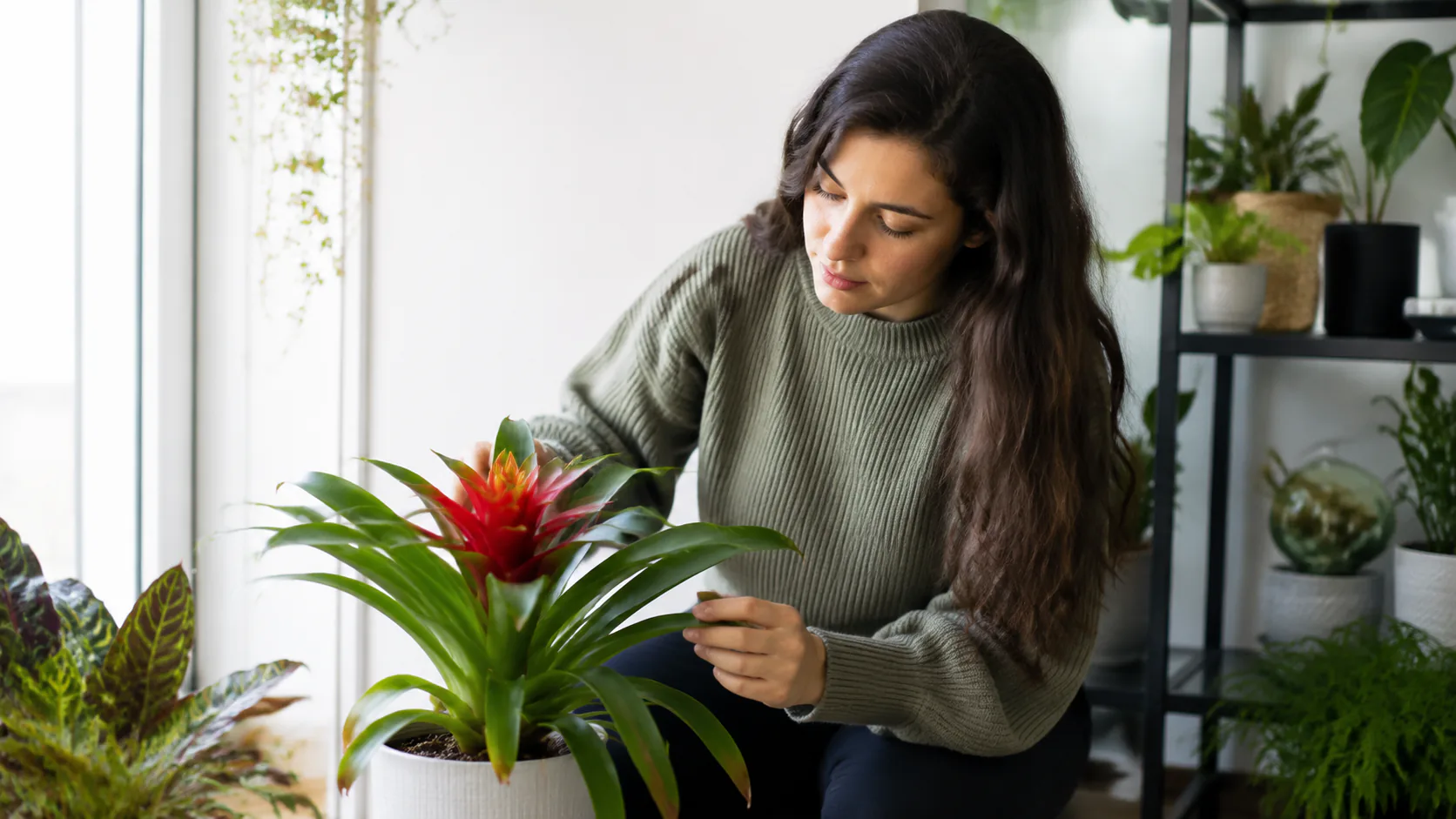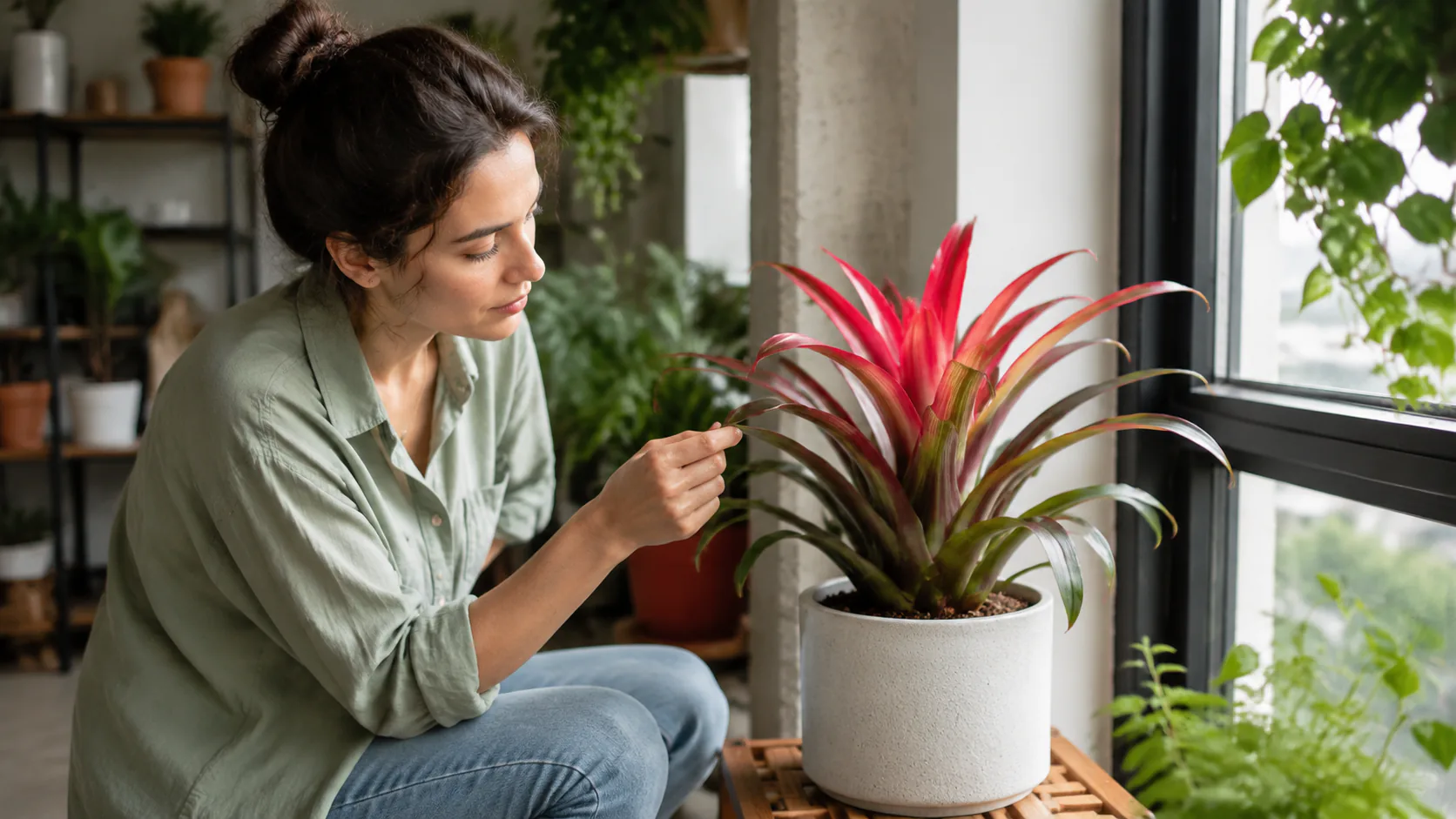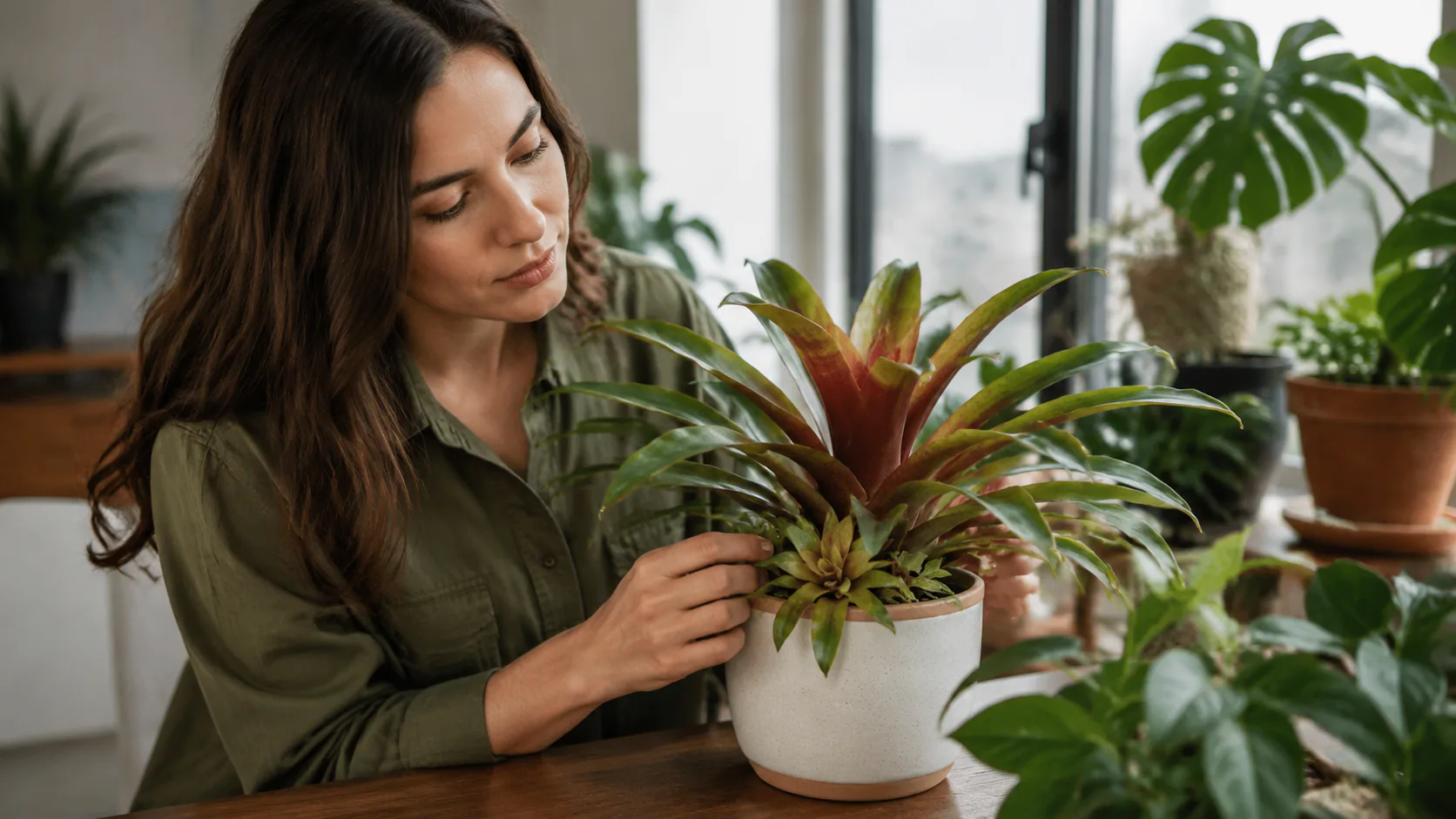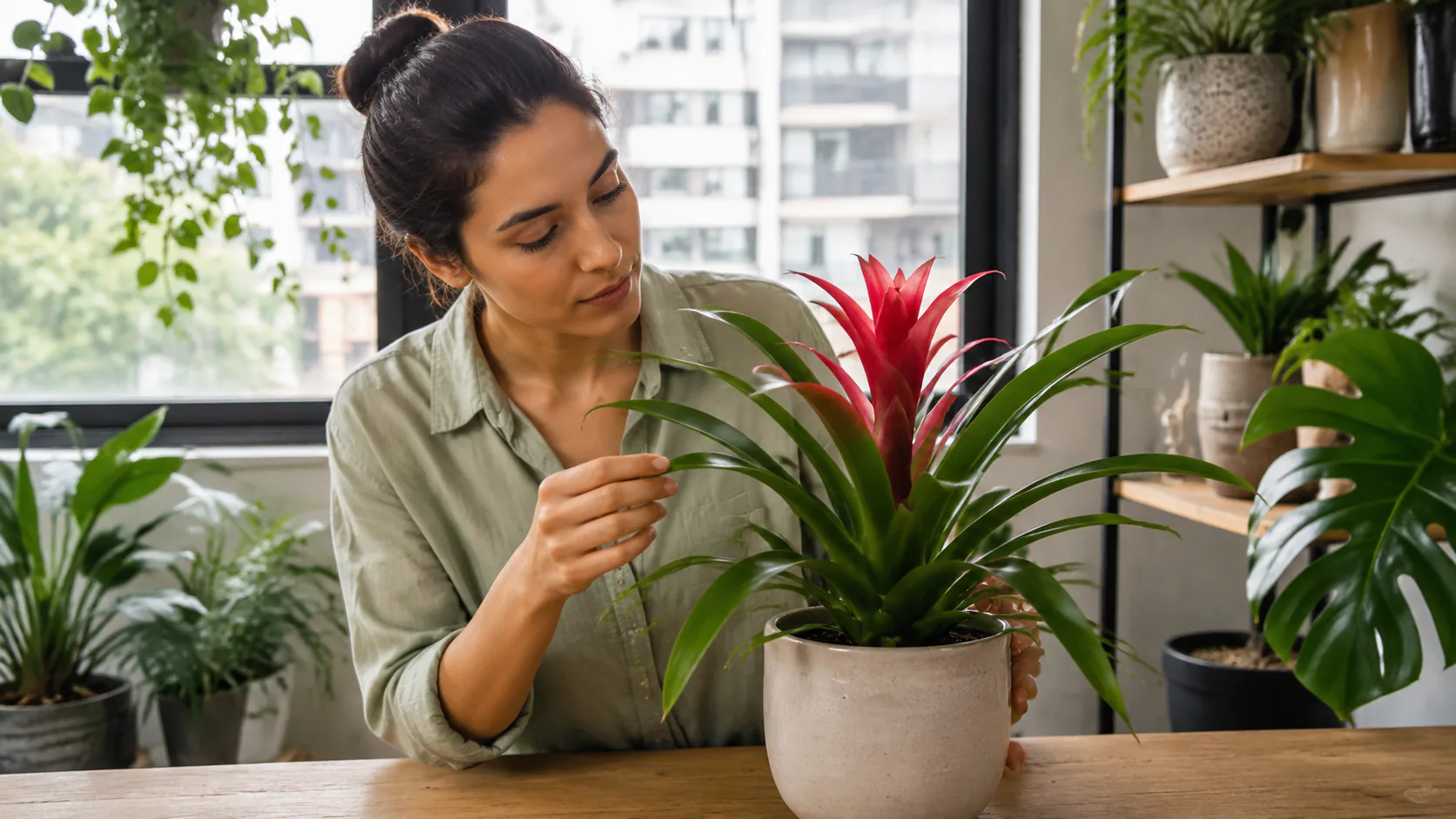
Bromeliad Care Basics Indoors is a practical guide for indoor growers who want plants to survive real homes, not perfect greenhouse conditions. The focus is simple indoor bromeliad care for beginners: what to look for, how to set up care, and how to avoid the mistakes that usually cause slow decline.
Start With Light, Not Water
Most indoor bromeliads want bright filtered light rather than a dark shelf or harsh afternoon sun. A spot near an east window, a bright room set back from a south window, or a desk with a quality grow light usually works. Leaves that fade, stretch, or lose color often need more light; bleached or scorched areas suggest too much direct sun.
Before making a change, note cup cleanliness, leaf firmness, mix dryness, root odor, light intensity, and air movement around the rosette. Read those clues together: they show whether the current home supports the goal to treat the central cup and the small root system as separate moisture zones rather than watering the pot like ordinary foliage, rather than merely describing one damaged leaf or a label on the pot.
Understand the Cup
Many tank bromeliads hold water in a central cup. That cup should be refreshed so it does not become stale, especially in warm rooms. The roots still need oxygen, so the potting medium should not stay wet for days. Think of bromeliad roots as anchors and moisture managers, not as swamp roots.
For the next comparison, write down cup cleanliness, leaf firmness, mix dryness, root odor, light intensity, and air movement around the rosette. Date the note and take a photograph from a consistent angle so that changes related to treat the central cup and the small root system as separate moisture zones rather than watering the pot like ordinary foliage can be distinguished from normal day-to-day variation.
Use an Airy Potting Mix
Choose bark, perlite, orchid mix, or another chunky houseplant blend instead of dense potting soil. A nursery pot inside a decorative cachepot is practical because it lets excess water drain away. If the plant is mounted or grown very loosely, watch humidity and cup water more closely.
The most misleading shortcut is a full cup does not justify soggy potting mix, and dry mix does not always mean the cup should remain stagnant. When that pattern appears, return to cup cleanliness, leaf firmness, mix dryness, root odor, light intensity, and air movement around the rosette, identify the smallest relevant cause, and change that variable alone.
Feed Lightly and Cleanly
Bromeliads are not heavy feeders indoors. Diluted fertilizer during active growth is enough for most home settings, and too much fertilizer can leave salts in the cup or potting mix. Flush the cup occasionally, wipe dusty leaves, and keep the plant away from cold drafts and blasting heat vents.
Put the guidance into practice by choosing to inspect the cup and mix separately, empty trapped cover-pot water, and rotate the plant for even light. Measure progress through the cues that belong to this article—cup cleanliness, leaf firmness, mix dryness, root odor, light intensity, and air movement around the rosette—and allow enough time for those signs to change before revising the plan.
Troubleshooting Basics
Why does a bromeliad have such a small root system? Many common bromeliads use roots mainly for anchoring, so an oversized wet pot creates more risk than benefit. Use that answer alongside the current evidence—cup cleanliness, leaf firmness, mix dryness, root odor, light intensity, and air movement around the rosette—instead of treating it as a rule that overrides the plant's condition.
For Bromeliad Care Basics Indoors, the practical takeaway is to treat the central cup and the small root system as separate moisture zones rather than watering the pot like ordinary foliage. Begin with bright filtered light, an airy container, modest root-zone moisture, and clean water handled according to the bromeliad type, follow through when you inspect the cup and mix separately, empty trapped cover-pot water, and rotate the plant for even light, and let the next visible response determine whether another change is necessary.
Sources: - RHS, How to Grow Bromeliads - https://www.rhs.org.uk/plants/bromeliads/growing-guide - Joy Us Garden, Bromeliad Care Indoors - https://www.joyusgarden.com/bromeliad-care/ - Plant Addicts, Bromeliad Care - https://plantaddicts.com/bromeliad-care/