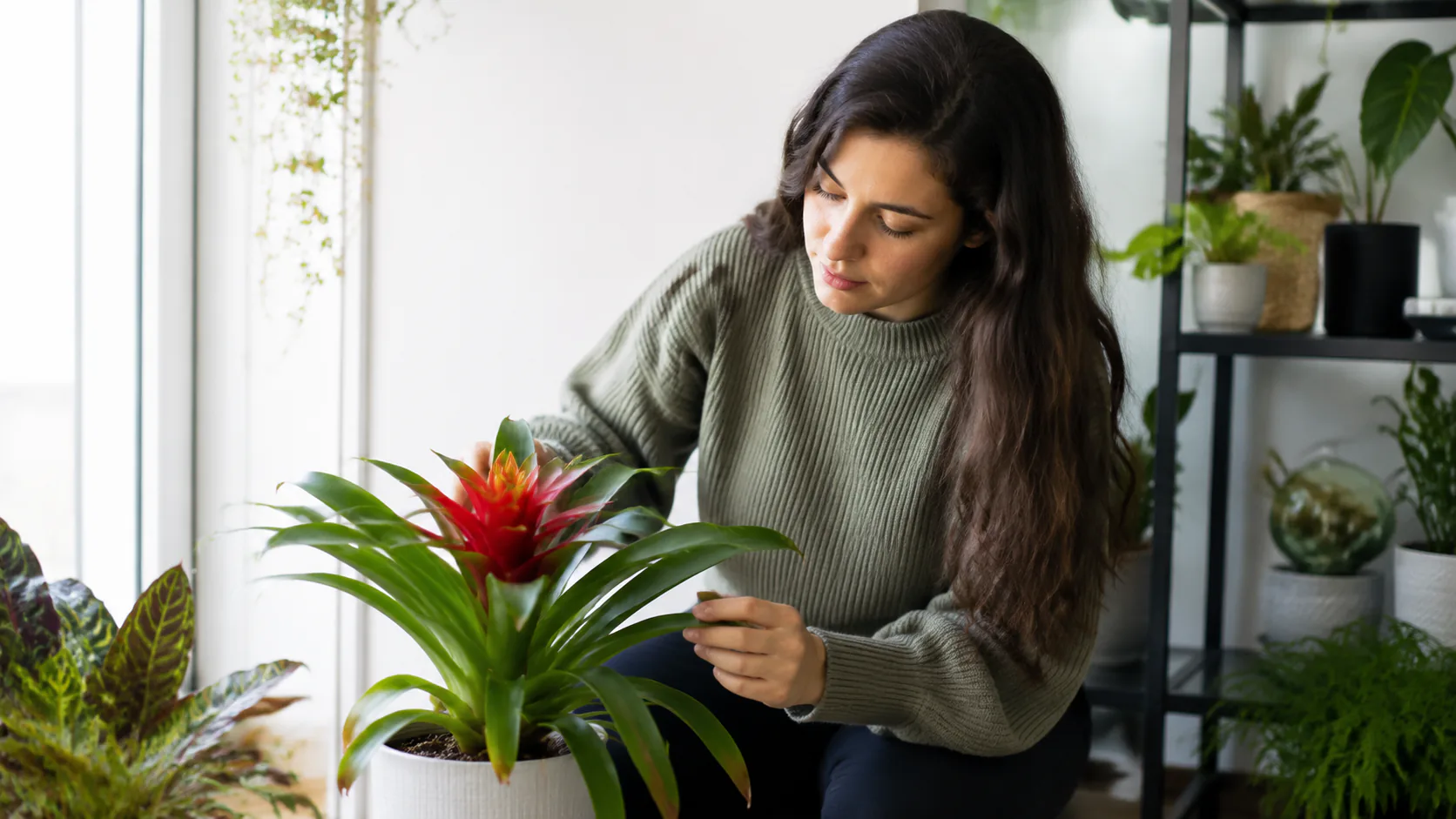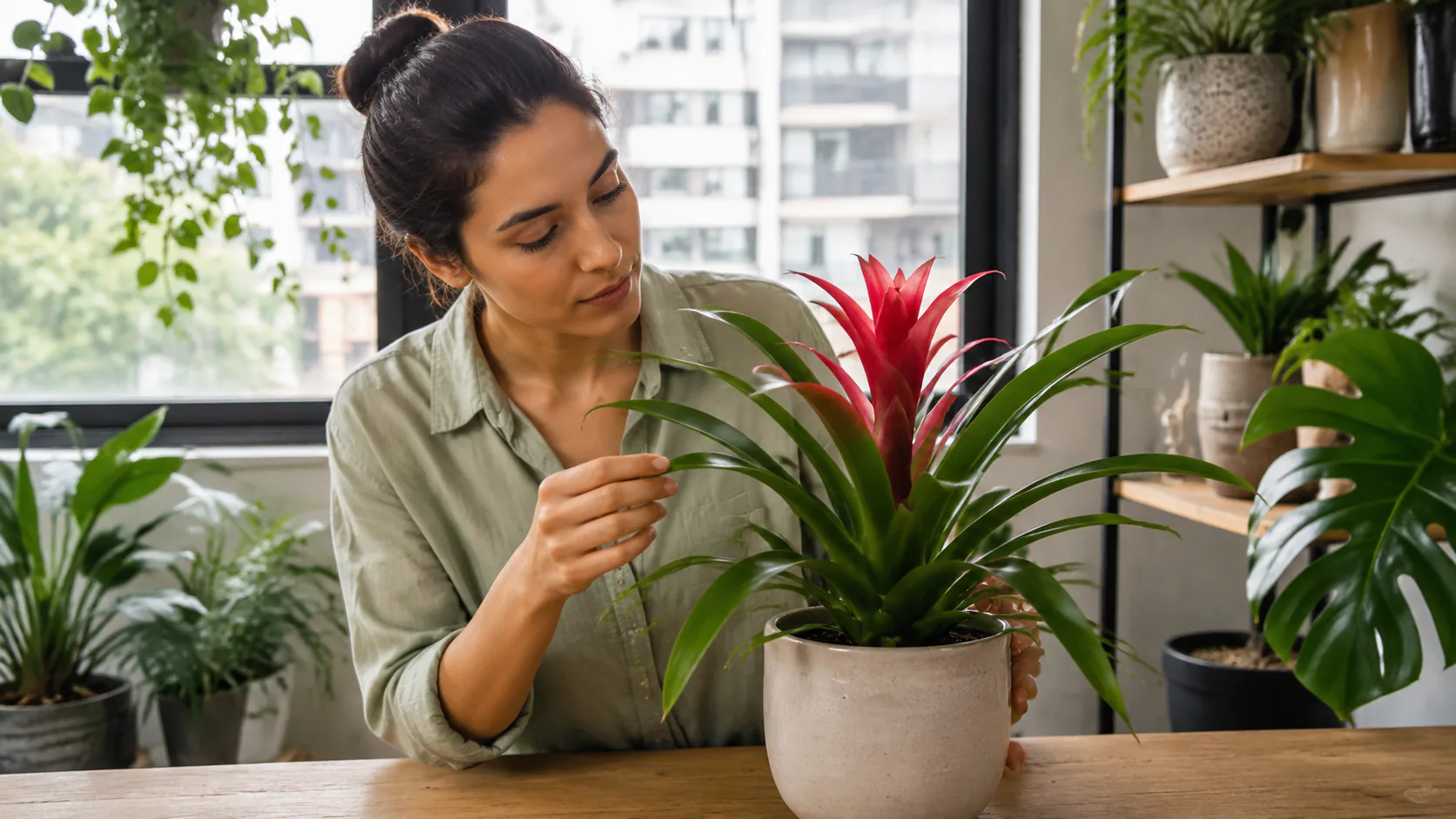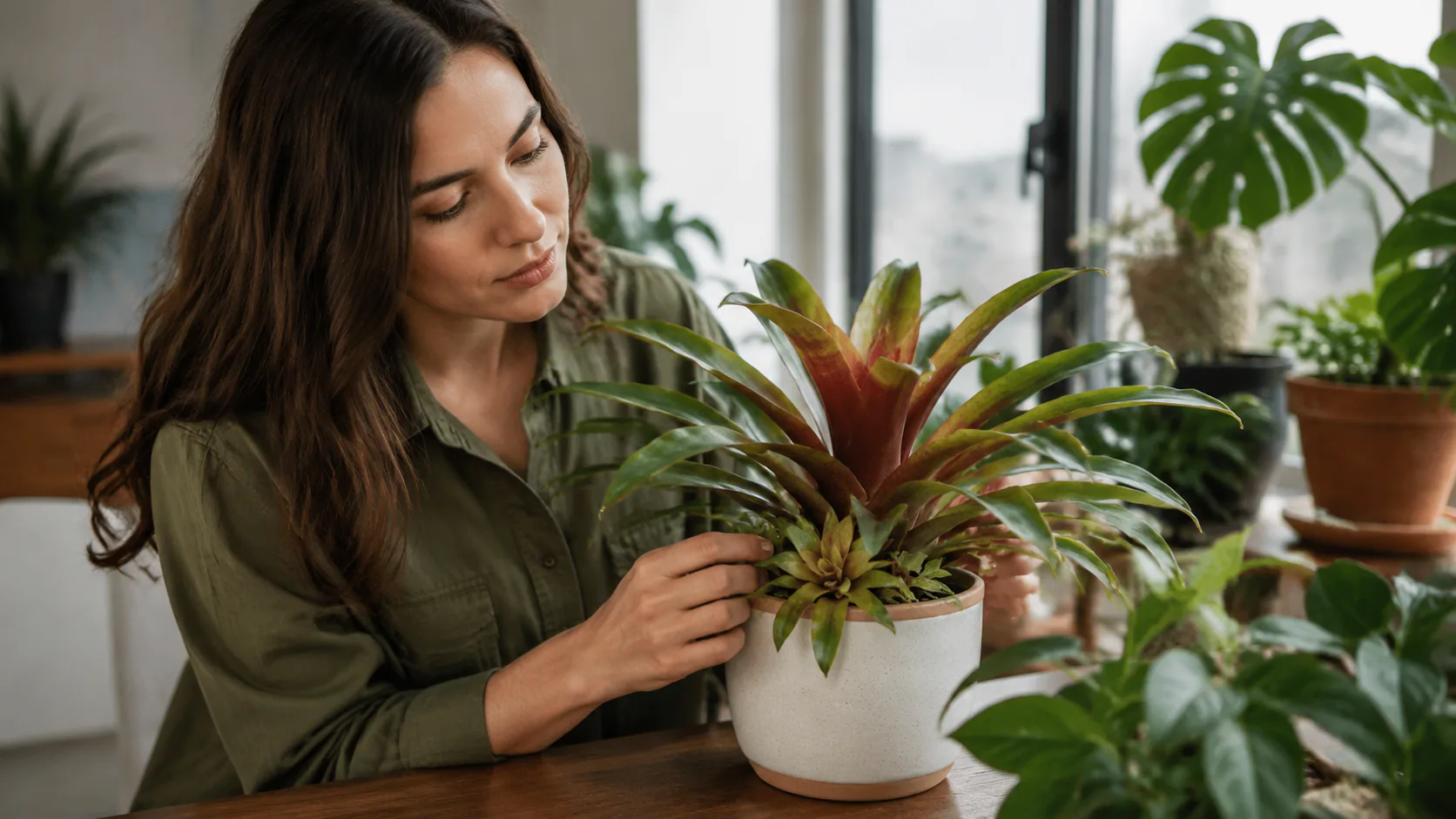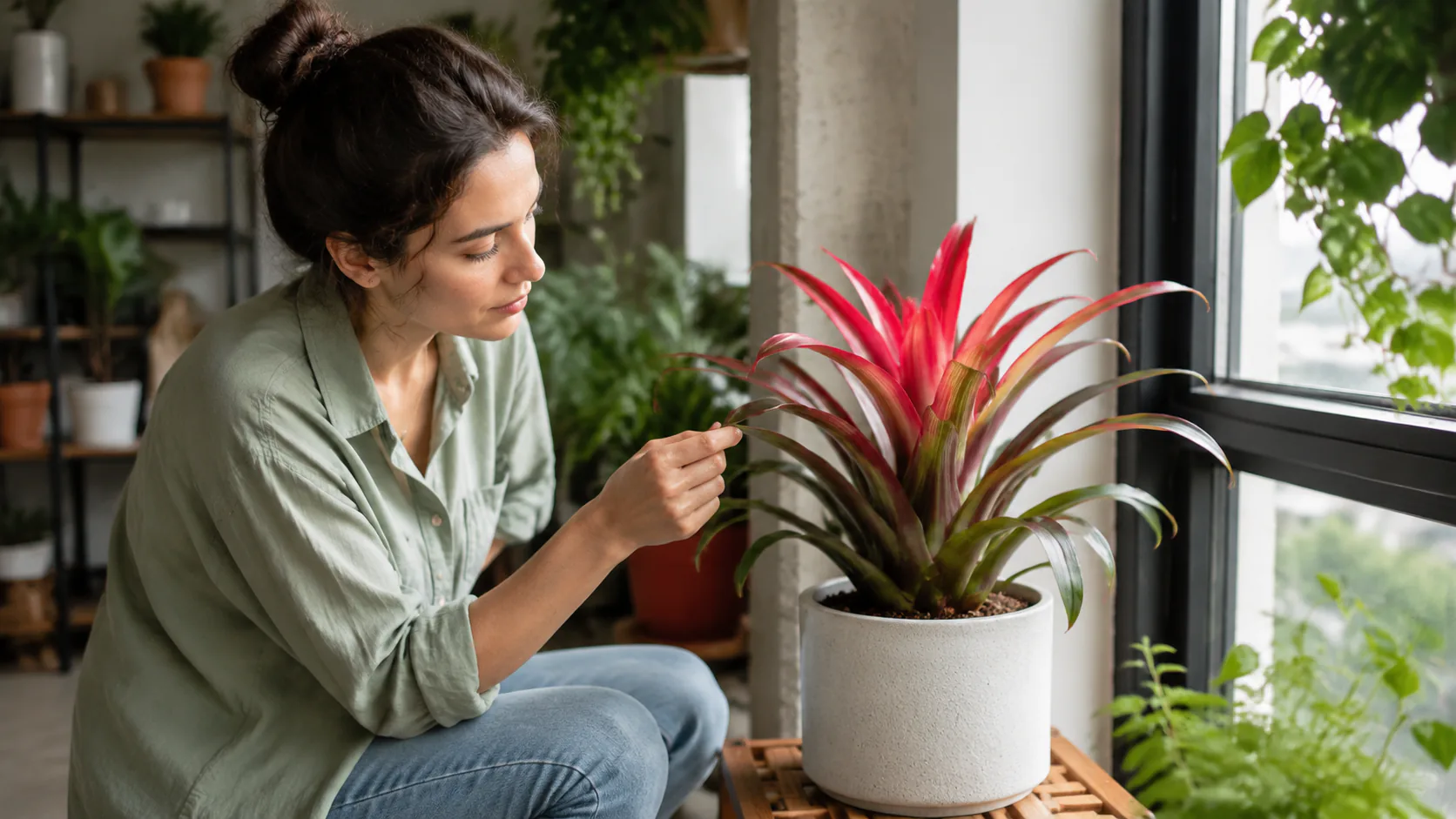
Bromeliad Light and Water Guide is a practical guide for indoor growers who want plants to survive real homes, not perfect greenhouse conditions. The focus is balancing light, cup water, and pot moisture for bromeliads: what to look for, how to set up care, and how to avoid the mistakes that usually cause slow decline.
Read the Leaves for Light Clues
Bromeliad leaves tell a useful story. Strong color and firm leaves usually mean the plant is receiving enough light. Long, loose growth can mean the plant is reaching. Brown bleached patches usually mean direct sun hit the leaves too strongly. Move the plant gradually because sudden changes can stress foliage that adapted to a previous location.
The first inspection should cover leaf color, scorching, stretched growth, cup condition, mix dryness, and the distance from the window. Read those clues together: they show whether the current home supports the goal to balance light and moisture together because a darker room slows drying while stronger light increases water use, rather than merely describing one damaged leaf or a label on the pot.
Refresh Water Without Soaking Roots
Watering depends on the type of bromeliad. Tank types can hold a small amount of clean water in the central cup, but the cup should be emptied and refreshed. The potting mix should drain quickly and should not smell sour. If the mix stays wet, root problems can begin even while the cup looks normal.
A dated note should concentrate on leaf color, scorching, stretched growth, cup condition, mix dryness, and the distance from the window. Date the note and take a photograph from a consistent angle so that changes related to balance light and moisture together because a darker room slows drying while stronger light increases water use can be distinguished from normal day-to-day variation.
Adjust for Season and Room Conditions
A warm bright room dries faster than a cool shaded one. In winter, many indoor bromeliads need less water because growth slows and evaporation drops. In an air-conditioned apartment, humidity may be lower, so leaf tips can brown even when the soil is not dry. Small adjustments beat dramatic rescue attempts.
A common way to lose progress is strong midday sun can scorch leaves, while a dim wet location encourages decline even when the cup looks normal. When that pattern appears, return to leaf color, scorching, stretched growth, cup condition, mix dryness, and the distance from the window, identify the smallest relevant cause, and change that variable alone.
Avoid the Two Biggest Mistakes
The first mistake is treating bromeliads like thirsty tropical foliage plants and soaking the pot constantly. The second is treating them like cactus and leaving the cup bone dry for too long. The practical middle is clean cup water, airy roots, and bright indirect light.
For a routine that survives a busy week, move the plant gradually when light changes and adjust watering only after observing the new drying rate. Measure progress through the cues that belong to this article—leaf color, scorching, stretched growth, cup condition, mix dryness, and the distance from the window—and allow enough time for those signs to change before revising the plan.
Quick Answers
Can a bromeliad live in low light? It may persist, but weak light often reduces color, growth, and the rate at which the plant safely uses moisture. Use that answer alongside the current evidence—leaf color, scorching, stretched growth, cup condition, mix dryness, and the distance from the window—instead of treating it as a rule that overrides the plant's condition.
For Bromeliad Light and Water Guide, the practical takeaway is to balance light and moisture together because a darker room slows drying while stronger light increases water use. Begin with bright indirect light, stable warmth, fresh water for tank-forming types, and a root zone that drains quickly, follow through when you move the plant gradually when light changes and adjust watering only after observing the new drying rate, and let the next visible response determine whether another change is necessary.
Sources: - RHS, How to Grow Bromeliads - https://www.rhs.org.uk/plants/bromeliads/growing-guide - Joy Us Garden, Bromeliad Care Indoors - https://www.joyusgarden.com/bromeliad-care/ - Plant Addicts, Bromeliad Care - https://plantaddicts.com/bromeliad-care/