Holiday Cactus Care Without Guesswork is a practical guide for indoor growers who want plants to survive real homes, not perfect greenhouse conditions. The focus is care for Thanksgiving, Christmas, and Easter cactus: what to look for, how to set up care, and how to avoid the mistakes that usually cause slow decline.
Treat It Like a Forest Cactus
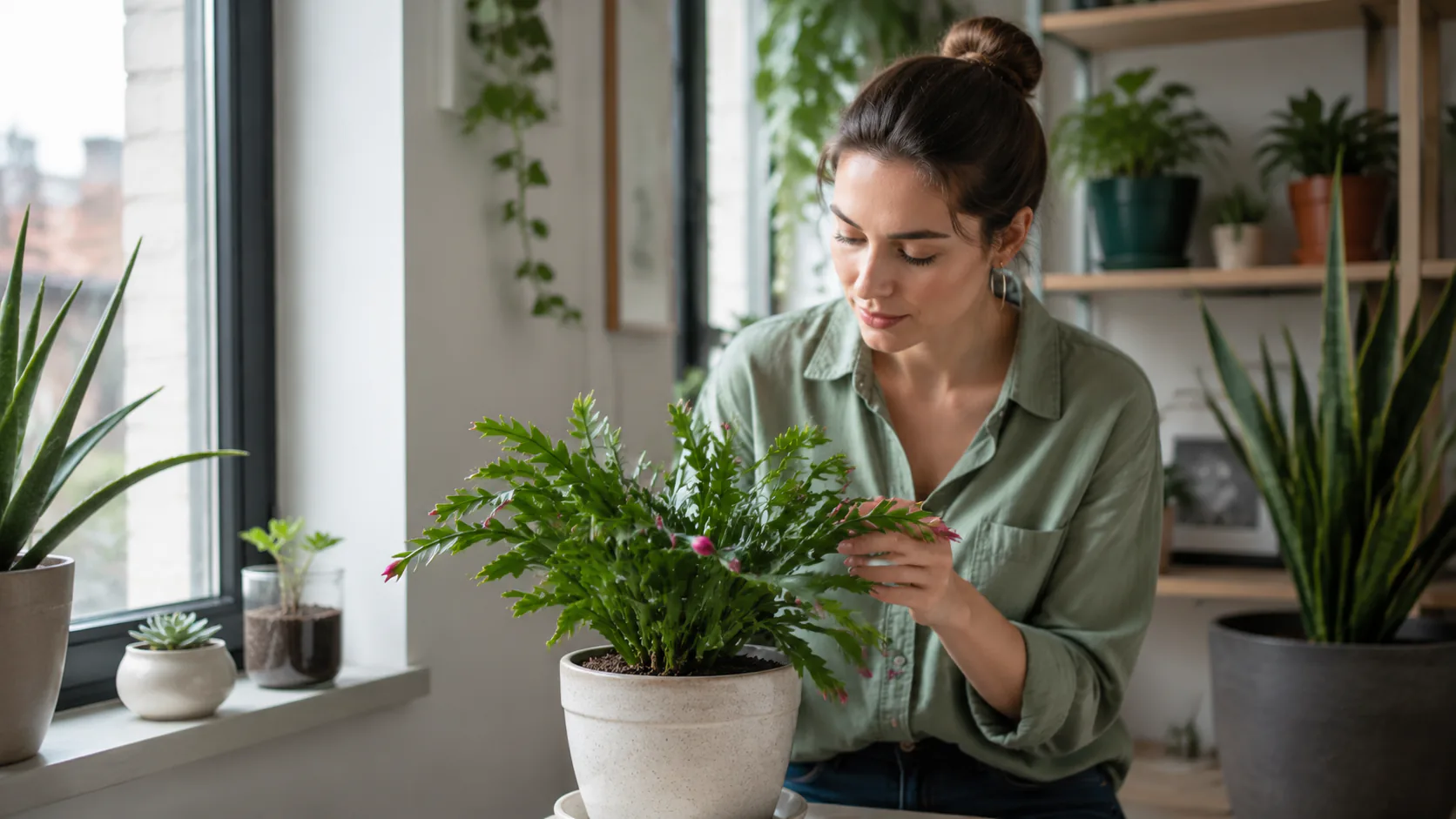
Holiday cactus is different from desert cactus. It comes from more humid, forest-like conditions and prefers bright indirect light, moderate moisture, and a potting mix that drains well without becoming dusty dry for long periods.
Start with segment firmness, bud development, drainage, room temperature, day length, and the rate at which the mix dries. Read those clues together: they show whether the current home supports the goal to care for a holiday cactus as a forest cactus rather than applying the brightest, driest desert-cactus routine, rather than merely describing one damaged leaf or a label on the pot.
Light and Water Through the Year
Water when the upper part of the mix begins to dry, then let excess water drain. The plant should not sit in a saucer of water. In bright rooms it may need more frequent watering than a desert cactus; in winter or low light it needs less.
A short record is most useful when it captures segment firmness, bud development, drainage, room temperature, day length, and the rate at which the mix dries. Date the note and take a photograph from a consistent angle so that changes related to care for a holiday cactus as a forest cactus rather than applying the brightest, driest desert-cactus routine can be distinguished from normal day-to-day variation.
Encouraging Buds
Bud formation is encouraged by seasonal cues: longer nights, cooler temperatures, and consistent care. Moving the plant constantly, letting it dry hard while buds form, or exposing it to heat vents can cause bud drop. Stability is part of the bloom strategy.
The avoidable failure pattern is moving, overheating, or sharply changing moisture during budding can stress the plant and contribute to bud drop. When that pattern appears, return to segment firmness, bud development, drainage, room temperature, day length, and the rate at which the mix dries, identify the smallest relevant cause, and change that variable alone.
After Bloom Care
After flowering, remove spent blooms and return to steady care. Pruning a few segments can encourage branching, and healthy cuttings can be propagated. Repot only when needed because holiday cactus often blooms well when slightly root-bound.
Make the routine concrete: keep the plant’s location stable while buds form and make seasonal light or temperature changes gradually. Measure progress through the cues that belong to this article—segment firmness, bud development, drainage, room temperature, day length, and the rate at which the mix dries—and allow enough time for those signs to change before revising the plan.
Common Problems
Why does a holiday cactus drop buds? Abrupt changes in temperature, light, location, or moisture can interrupt bud development. Use that answer alongside the current evidence—segment firmness, bud development, drainage, room temperature, day length, and the rate at which the mix dries—instead of treating it as a rule that overrides the plant's condition.
For Holiday Cactus Care Without Guesswork, the practical takeaway is to care for a holiday cactus as a forest cactus rather than applying the brightest, driest desert-cactus routine. Begin with bright indirect light, free-draining but moisture-retentive mix, moderate watering, and stable conditions during budding, follow through when you keep the plant’s location stable while buds form and make seasonal light or temperature changes gradually, and let the next visible response determine whether another change is necessary.
Sources: - Ted Lare, Non-Toxic Houseplants Safe for Kids and Pets - https://tedsgardens.com/15-non-toxic-houseplants-that-are-safe-for-kids-pets/ - The Spruce, Succulents Safe for Cats - https://www.thespruce.com/succulents-safe-for-cats-7479632 - Better Homes & Gardens, Best Low-Light Indoor Plants - https://www.bhg.com/gardening/houseplants/projects/indoor-plants-for-low-light/