Succulent Care for Apartments is a practical guide for indoor growers who want plants to survive real homes, not perfect greenhouse conditions. The focus is keeping succulents healthy in apartments: what to look for, how to set up care, and how to avoid the mistakes that usually cause slow decline.
Find the Brightest Real Light
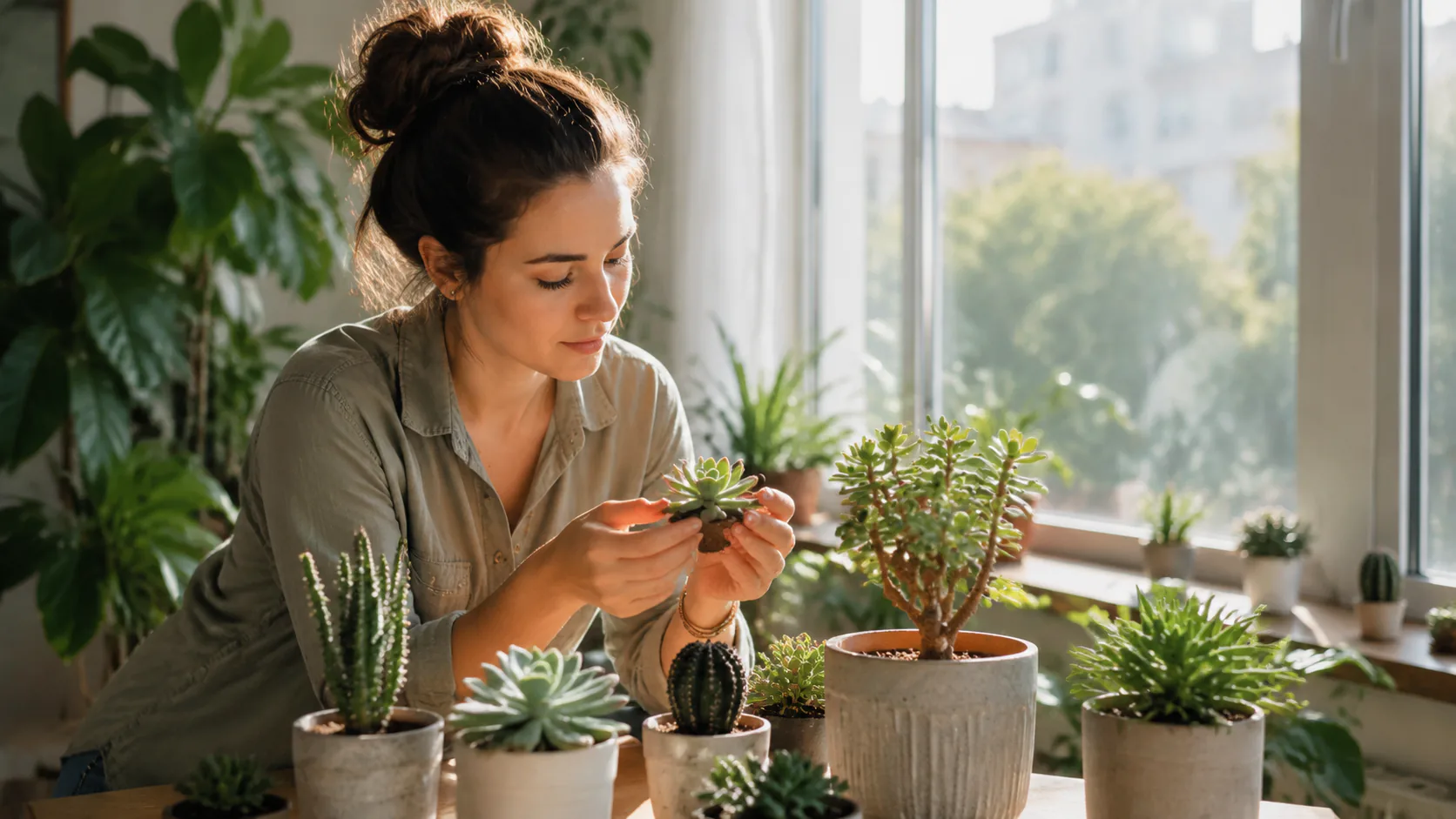
Succulents can work in apartments, but only if light is honest. A bright-looking room may still be weak for compact succulent growth if the window faces north, is shaded by another building, or sits far from the plant shelf. The brightest windowsill is usually the starting point.
Make an honest inventory of stretching, color loss, leaning, leaf firmness, soil dry-down, window heat, and seasonal light changes. Read those clues together: they show whether the current home supports the goal to give succulents the strongest appropriate light available and let that light level determine how quickly the pot can dry, rather than merely describing one damaged leaf or a label on the pot.
Use Small Pots With Drainage
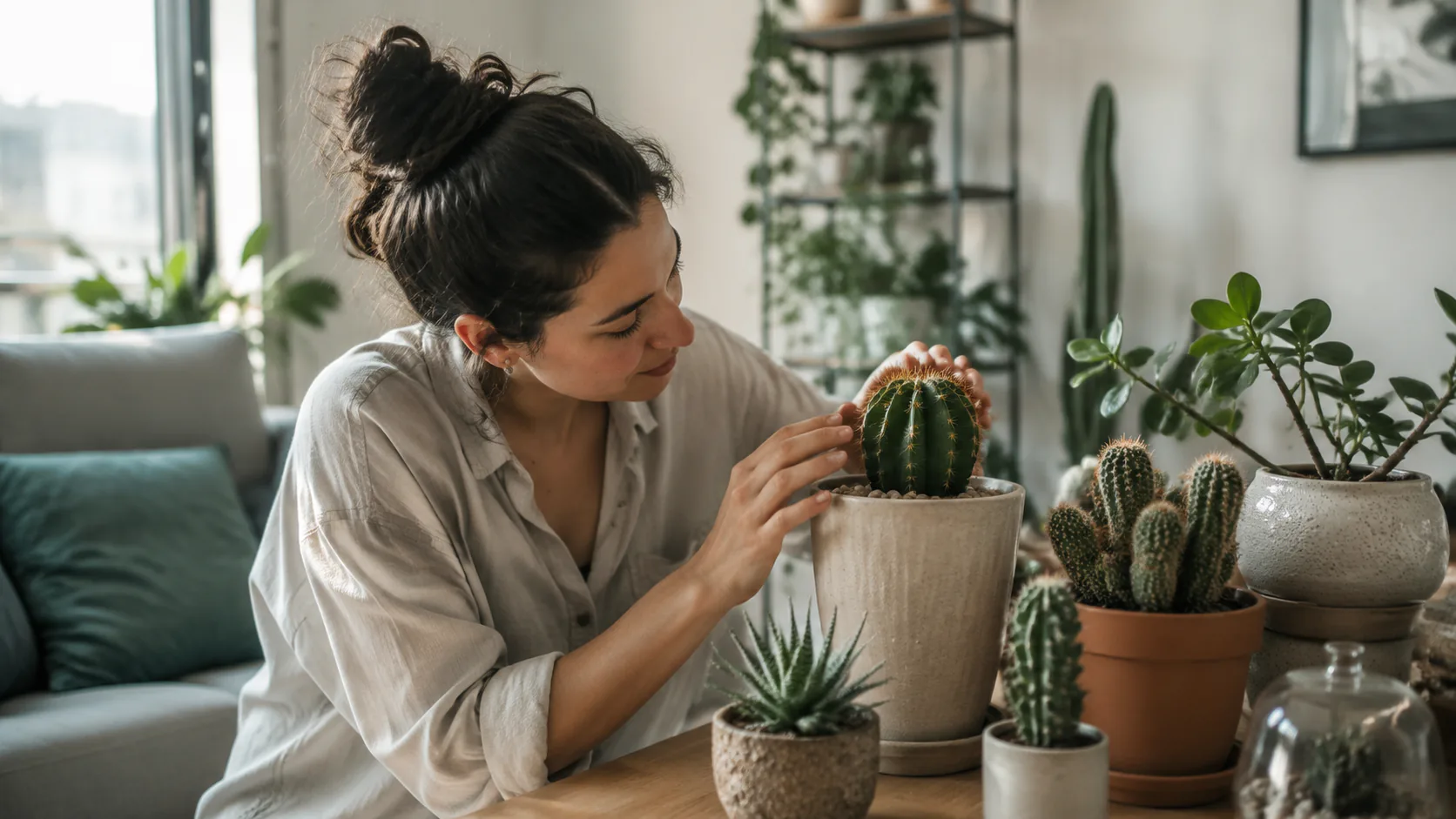
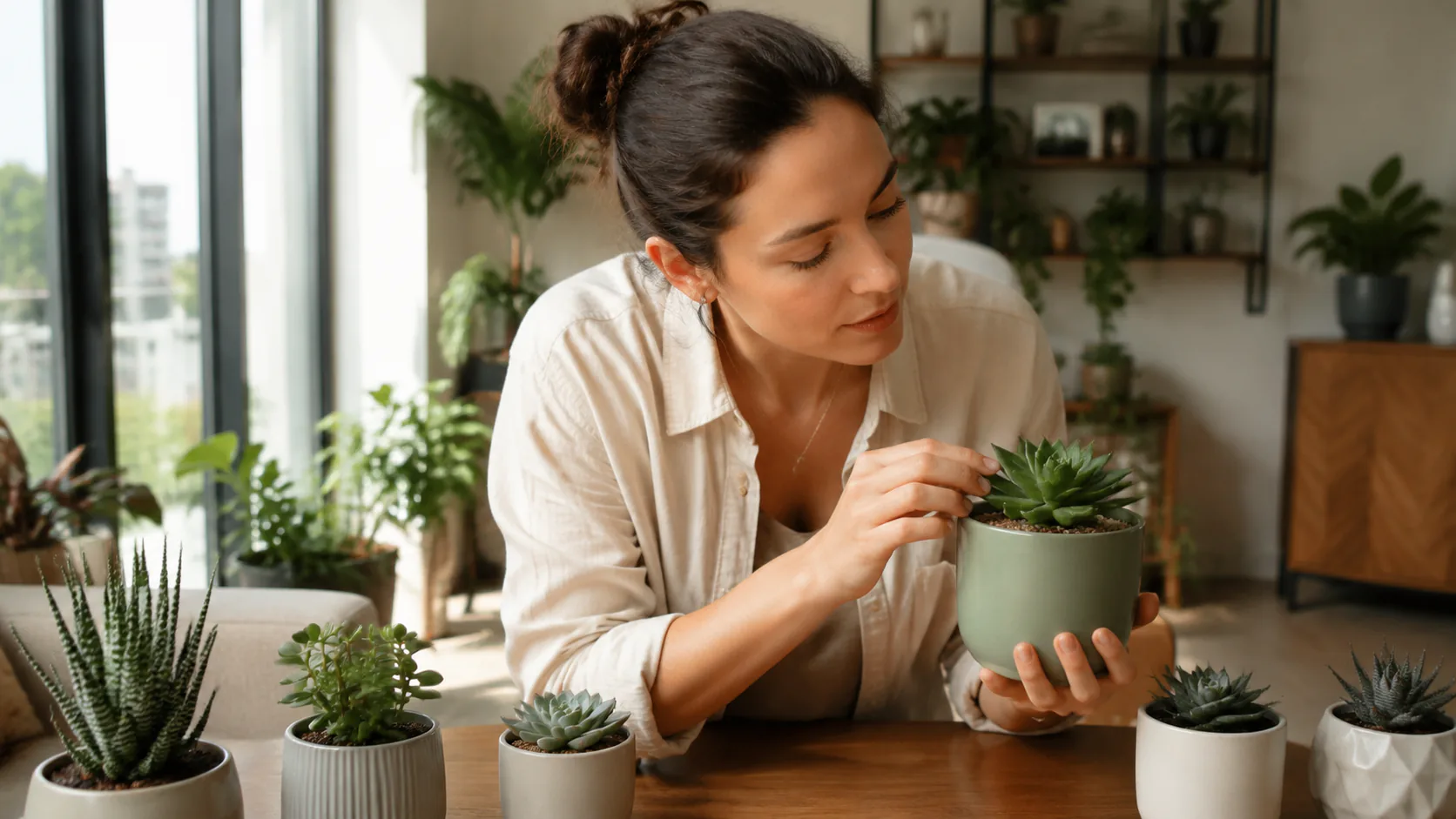
Small pots dry more predictably than oversized decorative containers. Drainage holes, gritty mix, and a pot that fits the root system reduce the risk of damp soil lingering for too long. Cachepots are fine if the inner pot drains and standing water is removed.
Track the conditions that explain progress or decline: stretching, color loss, leaning, leaf firmness, soil dry-down, window heat, and seasonal light changes. Date the note and take a photograph from a consistent angle so that changes related to give succulents the strongest appropriate light available and let that light level determine how quickly the pot can dry can be distinguished from normal day-to-day variation.
Water Deeply but Infrequently
When the mix is dry, water thoroughly so the root ball is evenly moistened. Then wait until it dries again. Spritzing the surface every few days encourages shallow moisture without giving roots a useful drink.
Intervene before this pattern becomes established: a dim apartment plus frequent watering is a more common failure pattern than simple underwatering. When that pattern appears, return to stretching, color loss, leaning, leaf firmness, soil dry-down, window heat, and seasonal light changes, identify the smallest relevant cause, and change that variable alone.
Rotate and Watch for Stretching
Stretching, pale growth, and wide gaps between leaves usually mean the plant needs more light. Rotate pots for even growth, but do not expect a low-light shelf to keep sun-loving succulents compact. A small grow light can be the difference between success and slow decline.
Keep the follow-through manageable: place the plant close to the best window, acclimate it to stronger sun, rotate it, and add a grow light if growth stretches. Measure progress through the cues that belong to this article—stretching, color loss, leaning, leaf firmness, soil dry-down, window heat, and seasonal light changes—and allow enough time for those signs to change before revising the plan.
Apartment-Specific Problems
Why is my succulent growing tall and pale? Stretched growth usually indicates insufficient usable light; increase light gradually rather than adding water. Use that answer alongside the current evidence—stretching, color loss, leaning, leaf firmness, soil dry-down, window heat, and seasonal light changes—instead of treating it as a rule that overrides the plant's condition.
For Succulent Care for Apartments, the practical takeaway is to give succulents the strongest appropriate light available and let that light level determine how quickly the pot can dry. Begin with bright light, gritty free-draining mix, a drainage hole, an appropriately sized pot, and generous space around leaves, follow through when you place the plant close to the best window, acclimate it to stronger sun, rotate it, and add a grow light if growth stretches, and let the next visible response determine whether another change is necessary.
Sources: - The Spruce, Succulents Safe for Cats - https://www.thespruce.com/succulents-safe-for-cats-7479632 - Yahoo, Major Houseplant Trends for 2026 - https://shopping.yahoo.com/home-garden/gardening/articles/6-major-houseplant-trends-2026-050000030.html - Garden Insider, Low Maintenance Houseplant Statistics 2026 - https://gardeninsider.org/plants/houseplants/low-maintenance-houseplant-statistics/