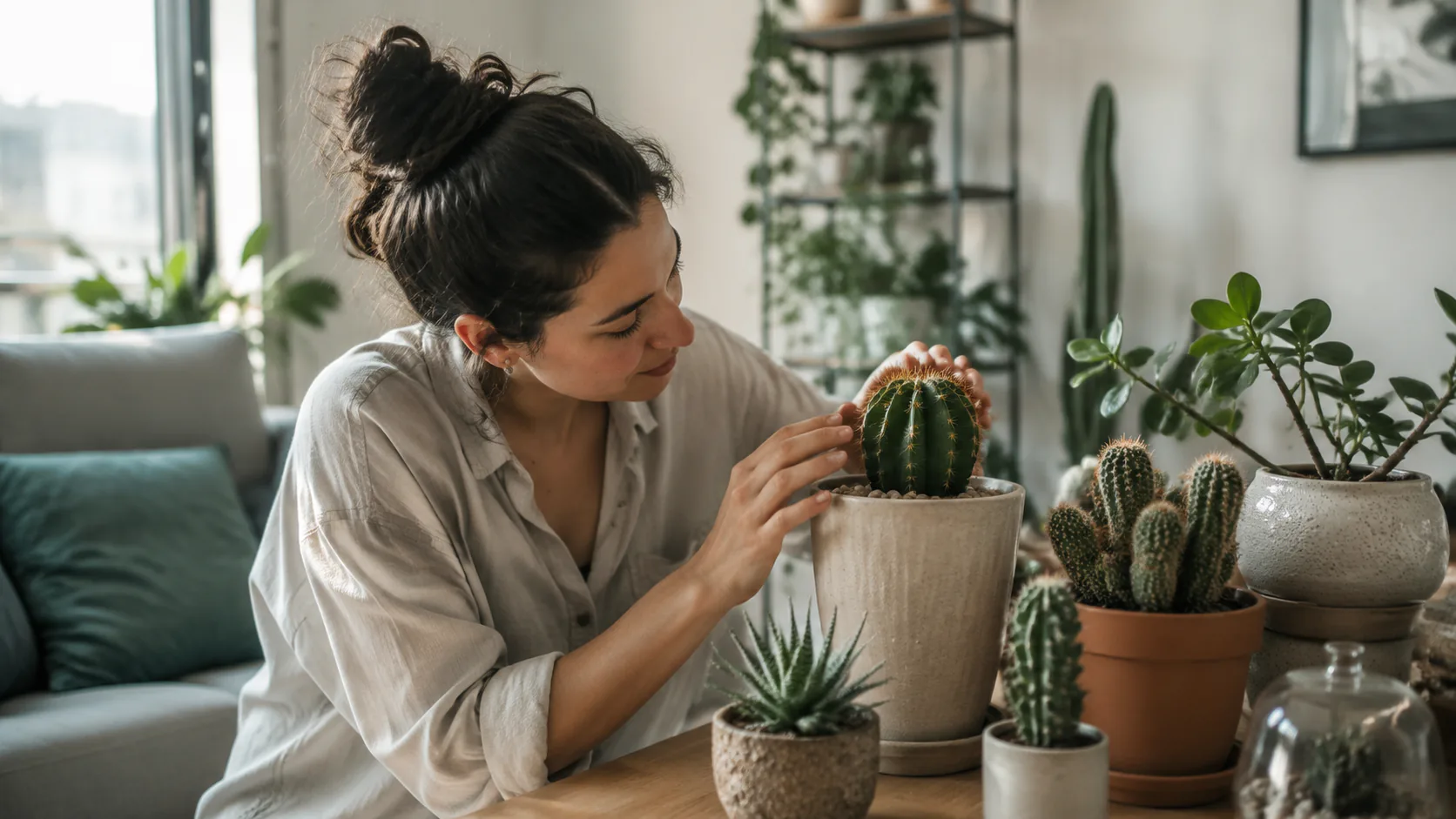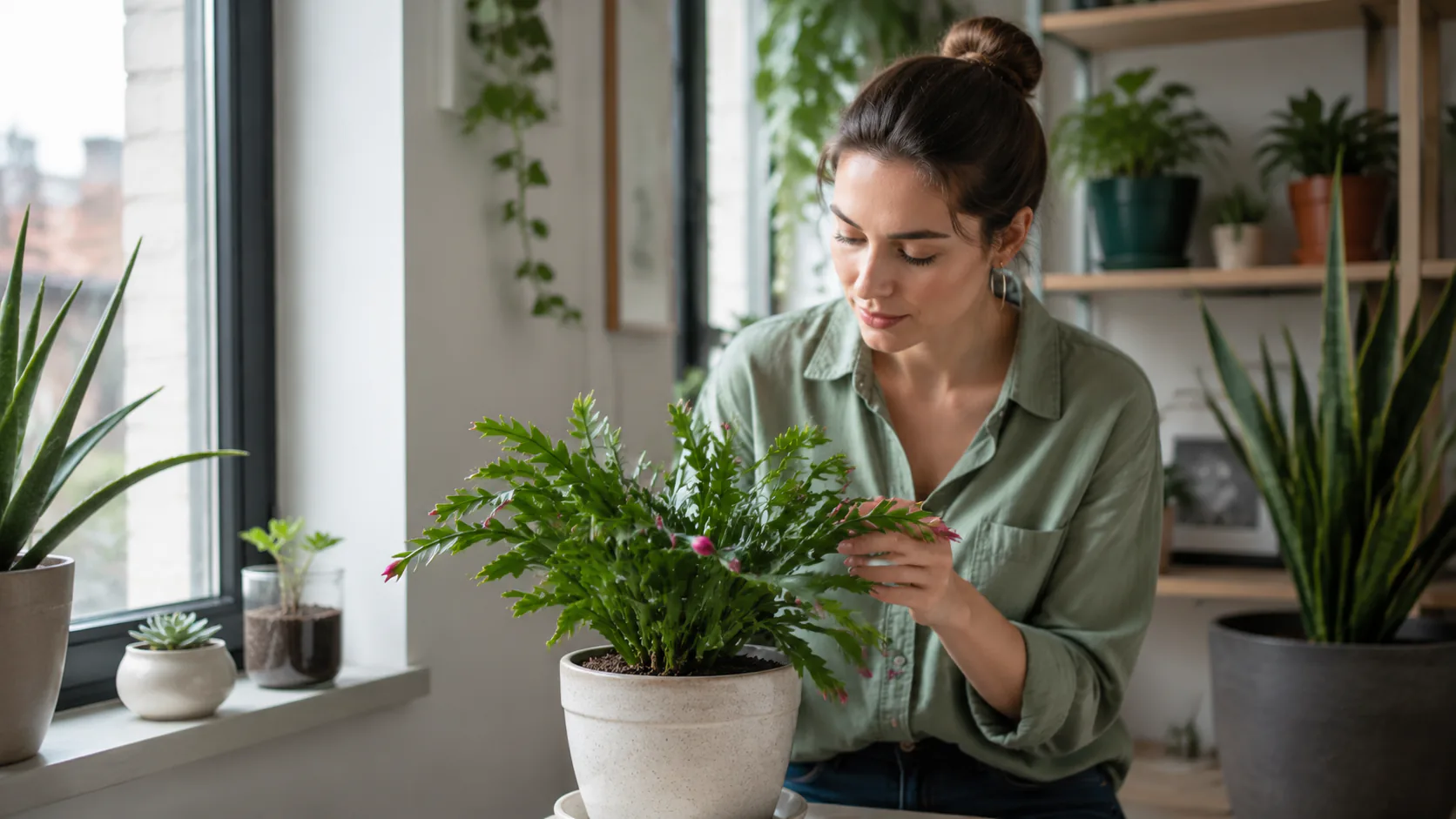
Succulent Propagation From Leaves and Offsets is a practical guide for indoor growers who want plants to survive real homes, not perfect greenhouse conditions. The focus is propagating succulents from leaves and offsets: what to look for, how to set up care, and how to avoid the mistakes that usually cause slow decline.
Choose the Right Material
Succulent propagation is slow but satisfying when expectations are realistic. Healthy plump leaves from suitable plants work better than damaged or shriveled leaves. Some succulents propagate easily from leaves, while others are better divided by offsets or stem cuttings.
Pay particular attention to a complete leaf base, firmness, callus formation, new roots, a developing rosette, and the condition of the parent leaf. Read those clues together: they show whether the current home supports the goal to begin with an intact healthy leaf or a clean offset and allow the wound to dry before adding moisture, rather than merely describing one damaged leaf or a label on the pot.
Let Cut Ends Callus
A clean break matters. Leaves should come away with the base intact. Let leaves or cuttings callus in a dry bright place out of direct sun before placing them on soil. This waiting period lowers the chance of rot.
Use one repeatable note to preserve a complete leaf base, firmness, callus formation, new roots, a developing rosette, and the condition of the parent leaf. Date the note and take a photograph from a consistent angle so that changes related to begin with an intact healthy leaf or a clean offset and allow the wound to dry before adding moisture can be distinguished from normal day-to-day variation.
Rooting Leaves Successfully
Lay leaves on barely moist gritty mix and give bright indirect light. Tiny roots or new rosettes may take weeks. Do not bury the leaf deeply or keep it wet. The old leaf feeds the baby plant and naturally shrivels over time.
The clearest reason to pause is pulling a leaf without its base or burying it in wet soil greatly increases the chance of failure. When that pattern appears, return to a complete leaf base, firmness, callus formation, new roots, a developing rosette, and the condition of the parent leaf, identify the smallest relevant cause, and change that variable alone.
Working With Offsets
Offsets are usually faster because they already look like miniature plants. Separate them gently, allow wounds to dry if needed, and pot them in small containers. Water lightly at first, then shift to normal succulent care once roots are active.
Use this as the next checkpoint: lay leaves with space between them, label the date, remove rotting pieces, and pot young plants after roots and growth are established. Measure progress through the cues that belong to this article—a complete leaf base, firmness, callus formation, new roots, a developing rosette, and the condition of the parent leaf—and allow enough time for those signs to change before revising the plan.
Moving New Plants
How long does leaf propagation take? Timing varies by species and conditions; judge progress by roots and new growth rather than a fixed deadline. Use that answer alongside the current evidence—a complete leaf base, firmness, callus formation, new roots, a developing rosette, and the condition of the parent leaf—instead of treating it as a rule that overrides the plant's condition.
For Succulent Propagation From Leaves and Offsets, the practical takeaway is to begin with an intact healthy leaf or a clean offset and allow the wound to dry before adding moisture. Begin with a shallow tray, airy mix, bright indirect light, stable warmth, and patience while stored moisture supports early growth, follow through when you lay leaves with space between them, label the date, remove rotting pieces, and pot young plants after roots and growth are established, and let the next visible response determine whether another change is necessary.
Sources: - The Spruce, Succulents Safe for Cats - https://www.thespruce.com/succulents-safe-for-cats-7479632 - Elle Decor, Low-Maintenance Gardening Trends 2026 - https://www.elledecor.com/life-culture/fun-at-home/a70696777/low-maintenance-gardening-trend-2026/ - Garden Insider, Low Maintenance Houseplant Statistics 2026 - https://gardeninsider.org/plants/houseplants/low-maintenance-houseplant-statistics/